Table of Contents
- The Moisturiser Breakout Problem Nobody Talks About
- How Singapore’s Climate Makes It Worse
- The Real Reasons Your Moisturiser Is Clogging Your Pores
- How to Read a Label and Spot the Problem Ingredients
- What a Skin-Safe Moisturiser Actually Looks Like
- The Right Way to Moisturise in a Tropical Climate
- What to Use Instead
- Final Thoughts
The Moisturiser Breakout Problem Nobody Talks About
You cleanse carefully. You avoid junk food. You never sleep in your makeup. And yet the breakouts keep coming — always in the same spots, always just a few days after you start a new moisturiser.
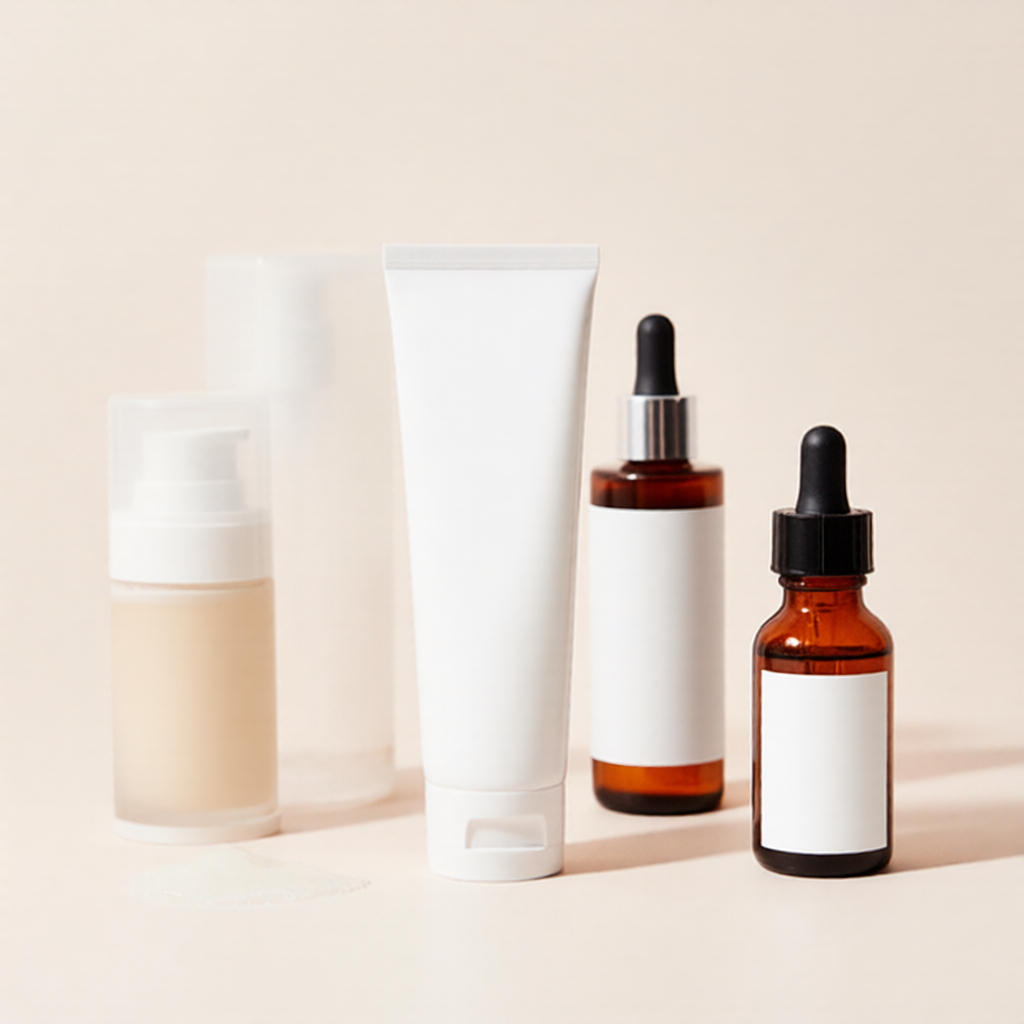
If this sounds familiar, the problem is almost certainly not your skin. It is your moisturiser.
This is one of the most common and most overlooked skincare issues in Singapore. People spend months blaming their diet, their pillowcases, their hormones, or their cleanser — never suspecting that the product designed to protect their skin is actually the one sabotaging it.
In dermatology, this is called acne cosmetica: breakouts triggered directly by skincare or cosmetic products. It is extremely common in humid climates, and Singapore’s unique environment makes it significantly worse than it would be almost anywhere else in the world.
Understanding why your moisturiser is causing breakouts — and what to replace it with — is one of the highest-impact changes you can make to your skin.
How Singapore’s Climate Makes It Worse
Singapore’s average relative humidity sits at 84%. In that environment, your skin is already working harder than normal to manage oil, sweat, and surface congestion. The last thing it needs is a moisturiser that adds another occlusive layer on top of all of that.
The problem is that most moisturisers sold globally are formulated for drier climates — European winters, Korean autumns, air-conditioned American offices. In those environments, a rich, occlusive cream makes perfect sense. It seals moisture in because the dry air would otherwise pull it straight back out.
In Singapore, that same cream behaves very differently. The air outside is already saturated with moisture, so your skin does not need help retaining it outdoors. What it needs is a product light enough not to add congestion on top of the sweat, oil, and pollution your skin accumulates throughout the day. Apply a heavy cream in this climate and you are essentially sealing all of that in — directly against your pores.
Then you walk indoors into air-conditioning, your skin dries out, the cream sits heavy on the surface, and by the next morning you have new breakouts in exactly the spots where your pores were most congested.
The Real Reasons Your Moisturiser Is Clogging Your Pores
Not all moisturisers cause breakouts for the same reason. There are several distinct mechanisms, and identifying which one applies to your product helps you find the right solution faster.
Comedogenic ingredients. Certain oils and emollients are rated highly comedogenic — meaning they are known to block pores in a significant percentage of people. Coconut oil, wheat germ oil, cocoa butter, and isopropyl myristate are common offenders found in otherwise well-reviewed moisturisers. A product can be labelled natural or organic and still contain highly comedogenic ingredients.
Over-occlusion. Even non-comedogenic ingredients can cause breakouts if the formulation creates too strong a seal on the skin surface. In Singapore’s heat, your skin needs to breathe and release sweat. A thick occlusive layer interrupts that process and traps everything beneath it.
Synthetic fragrance. Added fragrance is one of the most common causes of inflammatory skin reactions. It does not clog pores in the traditional sense, but it triggers low-grade inflammation that weakens the skin barrier over time, making breakouts more likely and harder to resolve.
Emulsifiers and stabilisers. Certain emulsifying agents used to give moisturisers their smooth texture can disrupt the skin’s natural lipid structure, particularly with daily use. This gradual barrier disruption leads to increased sensitivity and congestion.
Silicones. Dimethicone and similar silicones create a smooth, non-greasy finish that feels perfect in temperate climates. In tropical heat and humidity, they can trap sweat and sebum against the skin surface, contributing to the kind of congestion that eventually becomes breakouts.
How to Read a Label and Spot the Problem Ingredients
You do not need to memorise every problematic ingredient, but a few quick checks will help you assess any moisturiser before you buy it.
Look at the first five ingredients. These make up the bulk of the formulation. If you see coconut oil, isopropyl myristate, or any heavy butter high on the list, the product is likely too occlusive for everyday use in Singapore’s climate.
Scan for the word “fragrance” or “parfum.” These are catch-all terms that can represent dozens of undisclosed chemical compounds. In a moisturiser applied daily, this is a meaningful risk for sensitive and acne-prone skin.
Check for alcohol denat near the top of the list. Some brands use alcohol to create a lightweight feel, but it strips the skin barrier and triggers rebound oil production — exactly the wrong outcome for breakout-prone skin.
Look for the words non-comedogenic or dermatologically tested on the packaging, but do not rely on them alone. These terms have no regulatory definition and are largely self-declared by brands.
What a Skin-Safe Moisturiser Actually Looks Like
A moisturiser that works for acne-prone skin in Singapore’s climate shares several characteristics.
It is water-based or gel-based rather than cream or butter-based. It uses humectants — ingredients like hyaluronic acid, aloe vera, and glycerin — that draw moisture into the skin rather than sitting on top of it. It is free from synthetic fragrance, parabens, and high-comedogenicity oils. It absorbs quickly and leaves no sticky or greasy residue. And it is light enough that your skin can still function normally in both humid outdoor conditions and dry indoor air-conditioning.
Botanical actives like niacinamide, centella asiatica, and green tea extract add meaningful benefit without the occlusion risk of heavy emollients. These are the ingredients that regulate sebum, calm inflammation, and support your skin barrier simultaneously — exactly what Singapore skin needs from a daily moisturiser.
The Right Way to Moisturise in a Tropical Climate
Even with the right product, application matters.
Apply moisturiser to slightly damp skin immediately after cleansing or toning. This helps humectant ingredients lock in existing surface moisture rather than drawing water from deeper skin layers. Use the minimum amount needed — a thin, even layer is enough. More product does not mean more hydration in a humid climate; it means more congestion risk.
In the morning, your moisturiser should be light enough to layer comfortably under SPF without pilling or creating a heavy residue. At night, you have slightly more flexibility, but even your evening moisturiser should absorb fully rather than sitting on the skin surface.
Resist the urge to skip moisturiser on days when your skin feels oily. Dehydrated skin overproduces oil to compensate, making the breakout cycle worse. The goal is to hydrate without congesting — which is entirely possible with the right formulation.
What to Use Instead
If your current moisturiser is causing breakouts, the clearest path forward is to simplify.
Switch to a lightweight, organic gel moisturiser with a short, transparent ingredient list. Look for water as the first ingredient, followed by humectants and botanical actives rather than oils and butters. Avoid anything that feels heavy on the skin, takes time to absorb, or leaves shine immediately after application.
If you are unsure where to start, explore organic skincare formulated specifically for Singapore’s climate — products built around minimal ingredients, local conditions, and skin types that cycle between tropical heat and air-conditioned interiors every single day.
Give any new moisturiser a consistent four-week trial before judging results. Acne cosmetica typically clears within two to four weeks of removing the offending product.
Final Thoughts
Breakouts caused by your moisturiser are frustrating precisely because they mimic every other kind of acne. The solution, though, is simpler than most people expect: remove the congesting product, replace it with something lightweight and clean, and give your skin barrier the time it needs to recover.
In Singapore’s climate, your moisturiser should feel like almost nothing on your skin — barely there, fully absorbed, and completely invisible by the time you leave the house. If it feels heavier than that, your pores already know it before you do.