
Building a skincare routine does not have to mean filling your bathroom shelf with dozens of products. A simple routine with carefully selected organic or natural skincare products can provide a practical foundation for keeping your skin clean, hydrated and comfortable.
The most important step is understanding your skin type and choosing products that match its needs. Oily, dry, combination and sensitive skin can respond differently to the same formulation, so a routine should be adapted rather than copied from someone else.
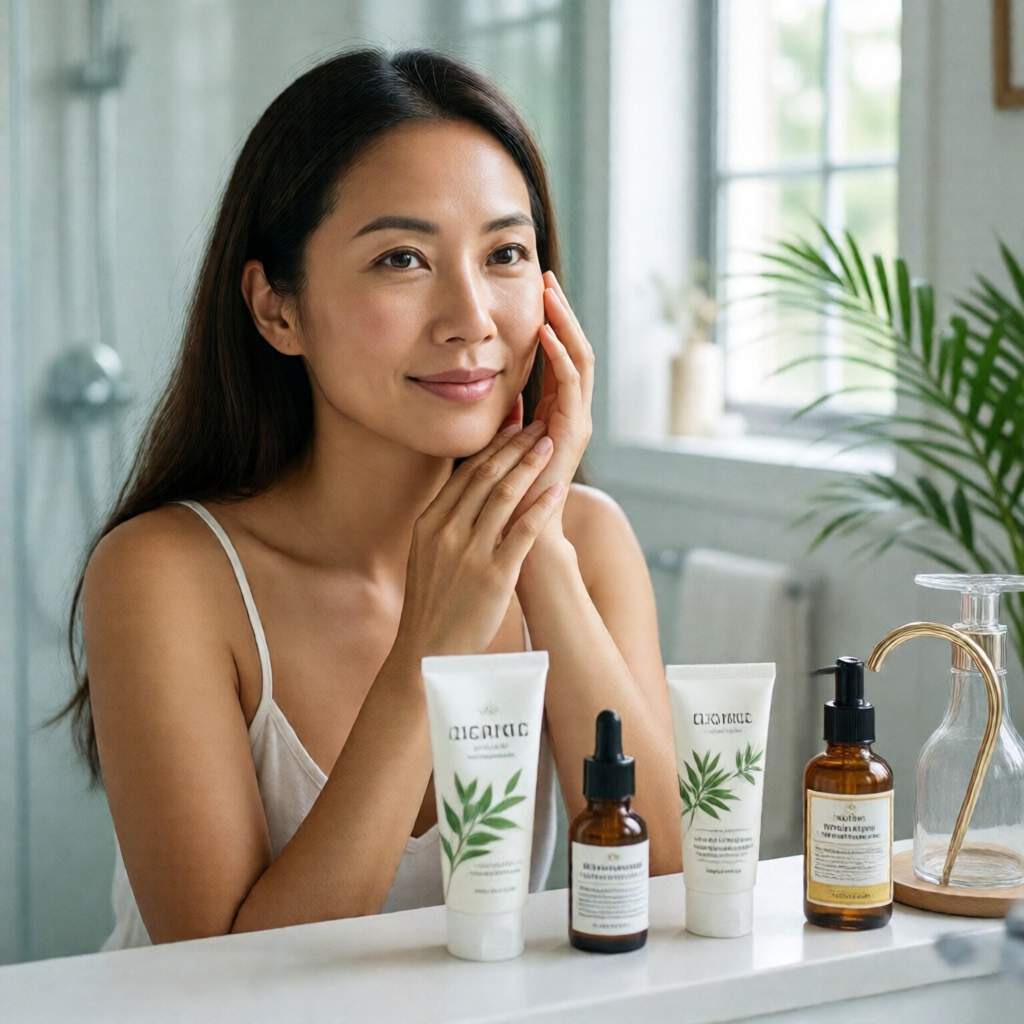
For people living in Singapore, climate is another important consideration. Warm temperatures, humidity, strong sunlight and frequent exposure to air conditioning can all influence how skincare products feel on the skin.
Table of Contents
- Why Your Skin Type Matters
- Skincare Routine for Oily Skin
- Skincare Routine for Dry Skin
- Skincare Routine for Combination Skin
- Skincare Routine for Sensitive Skin
- Skincare Routine for Normal Skin
- Choosing Organic Skincare Ingredients
- Morning and Evening Routine
- Common Mistakes When Building a Routine
- Final Thoughts
1. Why Your Skin Type Matters
Your skin type can influence which textures and formulations feel most comfortable.
Oily skin generally produces more sebum, while dry skin tends to feel less moisturised. Combination skin may have oilier areas, particularly around the forehead, nose and chin, while the cheeks feel more normal or dry.
Sensitive skin can be more easily irritated by certain products or environmental conditions.
Understanding these differences can help you avoid choosing products simply because they are popular.
Your skin can also change over time. Weather, lifestyle, age and environmental exposure can all affect how your skin feels.
This means your routine does not have to remain exactly the same forever.
2. Skincare Routine for Oily Skin
If your skin becomes shiny quickly, a lightweight routine may feel more comfortable.
Start with a gentle cleanser that removes excess oil without leaving the skin feeling excessively tight.
Follow with a lightweight hydrating product if your skin needs additional hydration. Ingredients such as aloe vera and glycerin are commonly used in hydrating formulations.
A lightweight moisturiser can then help maintain comfortable hydration.
During the daytime, finish with sunscreen.
A simple routine is:
Morning: Cleanser → Lightweight moisturiser → Sunscreen
Evening: Cleanser → Hydrating product if needed → Moisturiser
Avoid the temptation to repeatedly wash your face simply because it feels oily. Excessive cleansing can make your routine feel harsh and uncomfortable.
3. Skincare Routine for Dry Skin
Dry skin often benefits from a more moisturising routine.
Choose a gentle cleanser and avoid products that consistently leave your skin feeling tight after washing.
A hydrating serum or toner can be added if desired, followed by a moisturiser with a richer texture.
Ingredients such as glycerin, aloe vera, shea butter and plant oils are commonly found in moisturising formulations.
A simple routine could be:
Morning: Gentle cleanser → Hydrating product → Moisturiser → Sunscreen
Evening: Cleanser → Hydrating product → Richer moisturiser
If your skin becomes particularly dry in air-conditioned environments, adjusting your moisturiser or reducing unnecessary cleansing may help improve comfort.
4. Skincare Routine for Combination Skin
Combination skin can be more challenging because different areas may have different needs.
The forehead, nose and chin may become oily while the cheeks remain comfortable or feel dry.
Instead of applying a heavy product across your entire face, choose balanced formulations and adjust the amount according to each area.
A lightweight moisturiser can work well as a starting point.
You may also find that your T-zone needs less product while the cheeks benefit from additional moisturisation.
A basic routine is:
Morning: Gentle cleanser → Lightweight moisturiser → Sunscreen
Evening: Cleanser → Optional treatment → Moisturiser
Avoid treating your entire face as if it has only one skin characteristic.
5. Skincare Routine for Sensitive Skin
Sensitive-feeling skin may benefit from a particularly simple routine.
Start with a gentle cleanser and choose products with formulations that your skin tolerates comfortably.
Avoid introducing several new products at once. If you change your cleanser, serum, moisturiser and other products simultaneously, it becomes difficult to identify which product may be causing discomfort.
Fragrance and certain botanical ingredients may not suit everyone, even when they are naturally derived.
A minimalist routine can therefore be useful:
Morning: Gentle cleanser or water rinse → Moisturiser → Sunscreen
Evening: Gentle cleanser → Moisturiser
Additional products can be introduced gradually if needed.
6. Skincare Routine for Normal Skin
Normal skin does not necessarily require a complicated routine either.
A basic routine can focus on maintaining comfortable hydration and protecting the skin during the day.
Use a gentle cleanser, moisturiser and sunscreen as your foundation.
Optional products such as a hydrating serum, antioxidant product or occasional exfoliant can be added according to your personal preferences.
The key is to avoid adding products simply because your routine feels too short.
A simple routine can be perfectly adequate when your skin is comfortable.
7. Choosing Organic Skincare Ingredients
Organic and natural skincare products can contain a wide range of ingredients, and each formulation can behave differently.
When selecting products, look beyond the word “organic”.
Consider:
- Your skin type
- Product texture
- Ingredient list
- Fragrance content
- Intended purpose
- How your skin responds
- How the product fits into your existing routine
Common natural or naturally derived ingredients include aloe vera, jojoba oil, plant extracts, shea butter, botanical oils and various humectants.
However, natural does not automatically mean irritation-free.
Even botanical ingredients can cause sensitivity in some people. Patch testing and gradual introduction are useful habits when trying unfamiliar products.
8. Morning and Evening Routine
Your morning and evening routines do not need to contain the same number of steps.
Morning
The morning routine should focus on preparing the skin for the day.
A basic structure is:
Cleanser → Hydration → Moisturiser → Sunscreen
If your moisturiser already provides enough hydration, you may not need a separate serum.
Evening
Nighttime skincare can focus on cleansing and moisturisation.
A basic structure is:
Cleanser → Treatment if needed → Moisturiser
Removing sunscreen and makeup at the end of the day is particularly important before applying your nighttime products.
If you use treatment products, follow their individual instructions and avoid introducing several strong products simultaneously.
9. Common Mistakes When Building a Routine
Copying Someone Else’s Routine
A skincare routine that works for another person may not suit your skin type or environment.
Using Too Many Products
More products can make your routine unnecessarily complicated and make it harder to identify what your skin actually needs.
Changing Products Too Frequently
Give your routine time to become consistent unless a product causes obvious irritation.
Ignoring Texture
A product may contain appealing ingredients but still feel uncomfortable on your skin. Texture matters, particularly in Singapore’s warm and humid climate.
Forgetting Sunscreen
Daytime sun protection should be a regular part of your routine when appropriate.
Assuming Natural Means Suitable for Everyone
Natural ingredients can still cause sensitivity. Always consider individual tolerance.
10. Final Thoughts
Building a simple organic skincare routine starts with understanding your own skin rather than following the longest or most complicated routine available.
Oily skin may prefer lightweight hydration, while dry skin may benefit from richer moisturisation. Combination skin often requires a balanced approach, while sensitive-feeling skin may benefit from keeping the routine particularly simple.
Regardless of skin type, gentle cleansing, appropriate moisturisation and daytime sun protection provide a practical foundation.
Living in Singapore also means considering humidity, heat, sunlight and air conditioning when choosing skincare textures.
Organic skincare does not have to involve dozens of products. Choose products with clear purposes, introduce changes gradually and pay attention to how your skin responds.
A simple routine that fits your skin and lifestyle is easier to maintain and can become a consistent part of your everyday self-care.