
Clogged pores are a common skincare concern that can make the skin appear uneven, rough, or congested. They often occur when oil, dead skin cells, makeup, sunscreen, and other substances accumulate around the openings of hair follicles.
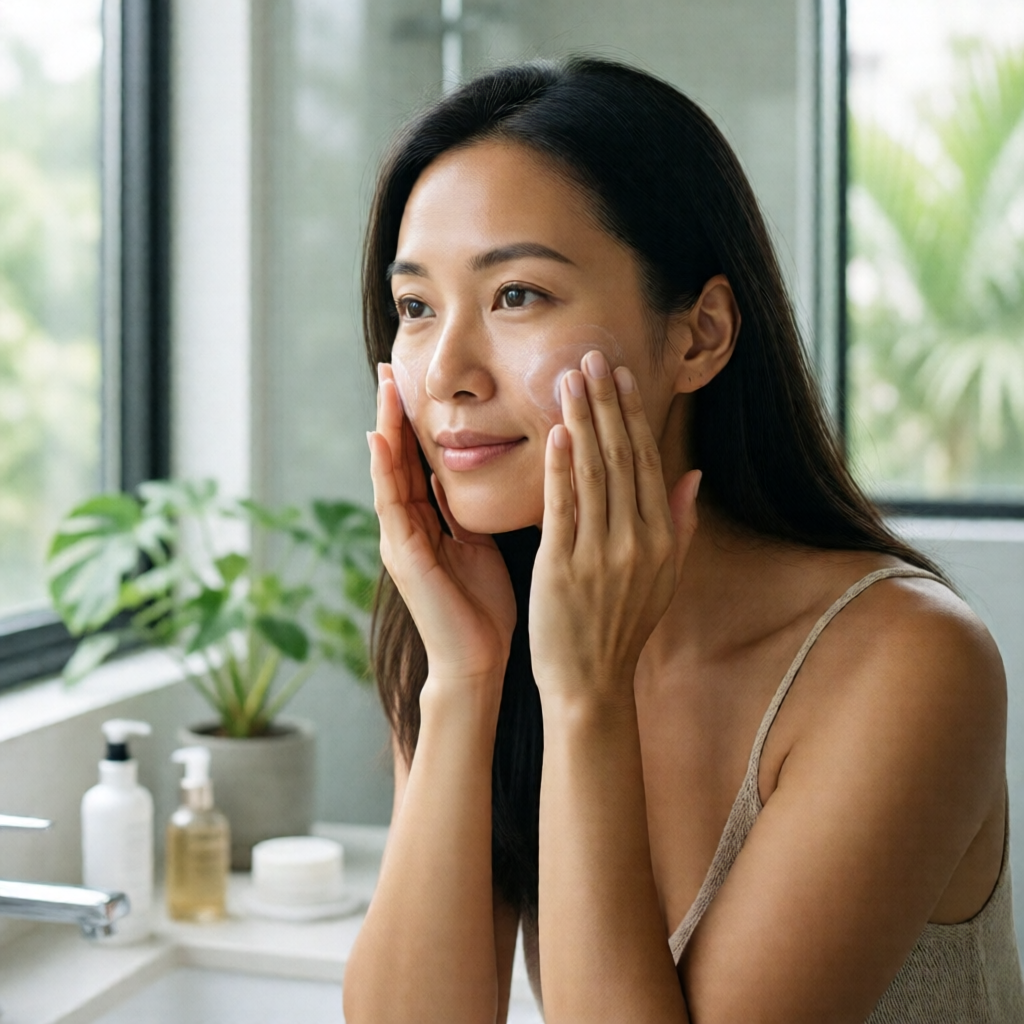
While it can be tempting to scrub the skin aggressively or use multiple pore-clearing products, a simpler approach is often easier to maintain. A consistent natural skincare routine can focus on gentle cleansing, suitable hydration, appropriate moisturising, and occasional exfoliation.
For people living in Singapore, skincare choices can be especially important because hot and humid outdoor conditions, perspiration, sunscreen use, and long hours in air-conditioned environments can all influence how the skin feels.
Table of Contents
- What Causes Clogged Pores?
- Can Natural Skincare Help Prevent Clogged Pores?
- Start With Gentle Cleansing
- Avoid Over-Cleansing
- Choose Lightweight Moisturisers
- Keep Your Skin Hydrated
- Exfoliate Without Overdoing It
- Be Careful With Heavy Oils
- Remove Makeup and Sunscreen Properly
- Choose Non-Heavy Skincare Textures
- A Simple Natural Routine for Clearer-Looking Skin
- Common Mistakes to Avoid
- Final Thoughts
1. What Causes Clogged Pores?
Pores can become congested when a mixture of sebum, dead skin cells, and other substances accumulates within hair follicles.
People with naturally oily skin may notice congestion more easily, but clogged pores are not limited to oily skin types.
Skincare products can also contribute to a heavy or congested feeling if their texture does not suit your skin.
Sweat and environmental buildup can be another consideration, particularly in a warm climate.
However, clogged pores are not simply caused by having “dirty” skin. Aggressive cleansing is therefore not necessarily the answer.
A balanced routine should remove daily buildup while maintaining the skin’s natural barrier.
2. Can Natural Skincare Help Prevent Clogged Pores?
Natural skincare can be incorporated into a routine designed for clearer-looking skin.
Ingredients derived from plants and other natural sources are widely used in cleansers, moisturisers, exfoliants, and facial treatments.
However, natural does not automatically mean non-comedogenic or suitable for every person.
The finished formulation matters. Two products containing natural ingredients can have very different textures and effects on different skin types.
Instead of choosing a product simply because it is labelled natural or organic, consider whether its formulation is lightweight enough for your skin and whether your skin responds comfortably to it.
3. Start With Gentle Cleansing
Cleansing helps remove sweat, sunscreen, makeup, excess oil, and environmental buildup.
Choose a cleanser appropriate for your skin type and use it according to the product’s instructions.
If your skin is oily, you may prefer a cleanser that effectively removes excess oil without leaving the face excessively tight.
If your skin is dry or sensitive, a gentler cleanser may be more appropriate.
Avoid scrubbing your face aggressively. Physical friction does not necessarily remove clogged pores more effectively and can leave the skin feeling irritated.
In the evening, cleansing is particularly useful for removing the products and buildup accumulated throughout the day.
4. Avoid Over-Cleansing
It may seem logical that washing your face more frequently will prevent clogged pores.
However, excessive cleansing can leave the skin feeling dry or uncomfortable. Some people may then respond by applying additional products, creating an unnecessarily complicated routine.
Instead, focus on effective but gentle cleansing.
If your skin becomes very tight after washing, consider whether your cleanser or cleansing frequency needs adjustment.
Your objective should be to remove excess buildup while maintaining comfortable skin.
5. Choose Lightweight Moisturisers
Moisturiser is still important even if you have oily or congestion-prone skin.
Skipping moisturiser completely can leave your skin feeling dehydrated, particularly after cleansing.
Instead, choose a texture that suits your skin.
Lightweight lotions, gels, and gel-creams may feel more comfortable for oily or combination skin.
If your skin is dry, you may need a richer moisturiser, but this does not mean applying a thick layer everywhere.
Use enough product to keep your skin comfortable without unnecessarily layering multiple heavy products.
6. Keep Your Skin Hydrated
Oiliness and dehydration can occur at the same time.
A person may have an oily complexion while experiencing tightness or a dehydrated feeling.
Lightweight hydrating ingredients such as glycerin, aloe vera, or hyaluronic acid are commonly used in skincare designed to provide water-based hydration.
Maintaining hydration can help you avoid relying on increasingly harsh cleansing products simply because your skin appears oily.
A simple hydrating serum followed by an appropriate moisturiser may be enough for many routines.
7. Exfoliate Without Overdoing It
Exfoliation can help remove some of the dead skin cells that accumulate on the surface of the skin.
Natural skincare products may use fruit enzymes, naturally derived acids, or gentle physical exfoliating ingredients.
The important point is moderation.
Using an exfoliating product too frequently can leave the skin feeling irritated, dry, or sensitive.
Start with a low frequency and adjust according to your skin’s response.
Avoid combining several exfoliating products in the same routine unless you have a clear reason and your skin tolerates them well.
If your skin becomes uncomfortable, reduce or stop exfoliation and return to a simpler routine.
8. Be Careful With Heavy Oils
Facial oils can be useful for supporting softness and reducing the feeling of dryness, but not every oil will feel comfortable on every person’s skin.
If you have combination or oily skin, a very rich facial oil may feel unnecessarily heavy.
This does not mean that all natural oils should be avoided. Jojoba oil and squalane, for example, are commonly used in lightweight skincare formulations.
The amount you apply also matters.
If your skin is prone to congestion, start with a small amount rather than applying multiple layers of rich oils.
9. Remove Makeup and Sunscreen Properly
Daily sunscreen is important, but it should be removed appropriately at the end of the day.
The same applies to makeup.
If you wear makeup or water-resistant sunscreen, follow a cleansing routine that effectively removes the products without excessive rubbing.
Depending on the formulation, this may involve a first cleansing step followed by a gentle facial cleanser.
Pay attention to areas where makeup or sunscreen tends to accumulate, such as around the nose, hairline, and jaw.
There is no need to scrub aggressively. Thorough but gentle cleansing is the goal.
10. Choose Non-Heavy Skincare Textures
Product texture can make a significant difference to how comfortable your skincare routine feels.
If you frequently experience a greasy or congested feeling, consider whether you are using too many rich products together.
For example, layering a facial oil, rich moisturiser, thick sleeping mask, and multiple serums may be unnecessary.
A simpler routine can make it easier to identify which products work well for you.
Look for products formulated for your skin type and consider lightweight textures when appropriate.
If a product consistently leaves your skin feeling heavy or congested, reconsider whether it belongs in your daily routine.
11. A Simple Natural Routine for Clearer-Looking Skin
A straightforward routine can contain just a few essential steps.
Morning
Start with a gentle cleanser if needed.
Apply a lightweight hydrating product if your skin requires additional hydration.
Follow with a suitable moisturiser.
Finish with broad-spectrum sunscreen.
Evening
Remove makeup and sunscreen appropriately.
Cleanse gently.
Apply a lightweight hydrating product if required.
Finish with your moisturiser.
Occasional Exfoliation
If your skin tolerates exfoliation, use one suitable exfoliating product occasionally according to its instructions.
Avoid adding multiple exfoliating treatments simply because your pores appear congested.
12. Common Mistakes to Avoid
One common mistake is trying to “dry out” oily skin.
Aggressive cleansers and excessive exfoliation can make the skin uncomfortable without necessarily solving the underlying problem.
Another mistake is using too many products at once.
Pore strips and aggressive scrubs may also encourage excessive physical manipulation of the skin.
Picking or squeezing congested areas can cause irritation and may leave temporary marks.
Finally, avoid assuming that a product is suitable simply because it is natural or organic. Natural ingredients can still be unsuitable for individual skin types.
Introduce new products gradually and pay attention to how your skin responds.
13. Final Thoughts
Preventing clogged pores does not require an aggressive skincare routine.
Gentle cleansing, appropriate hydration, a suitable lightweight moisturiser, and occasional exfoliation can provide a practical foundation for clearer-looking skin.
If you live in Singapore, consider the effect of humidity, perspiration, sunscreen, and air-conditioned environments when choosing skincare textures. Products that feel comfortable throughout the day are more likely to become part of a consistent routine.
Natural and organic skincare can certainly have a place in this approach, but the complete formulation matters more than the marketing label alone.
Rather than trying to remove every trace of oil or constantly exfoliating your skin, aim for balance. Cleanse gently, moisturise appropriately, introduce new products gradually, and give your skin time to respond.