Acne-prone skin often requires a careful approach to skincare. Using too many products, frequently changing your routine or choosing formulations that are too harsh can make it more difficult to understand what your skin needs.
As interest in natural beauty continues to grow, many people are exploring organic skincare products containing botanical extracts, plant oils and other naturally derived ingredients.
However, it is important to remember that organic does not automatically mean acne-safe. Natural ingredients can still irritate some skin types, and cosmetic skincare products should not be considered a replacement for professional acne treatment when it is needed.
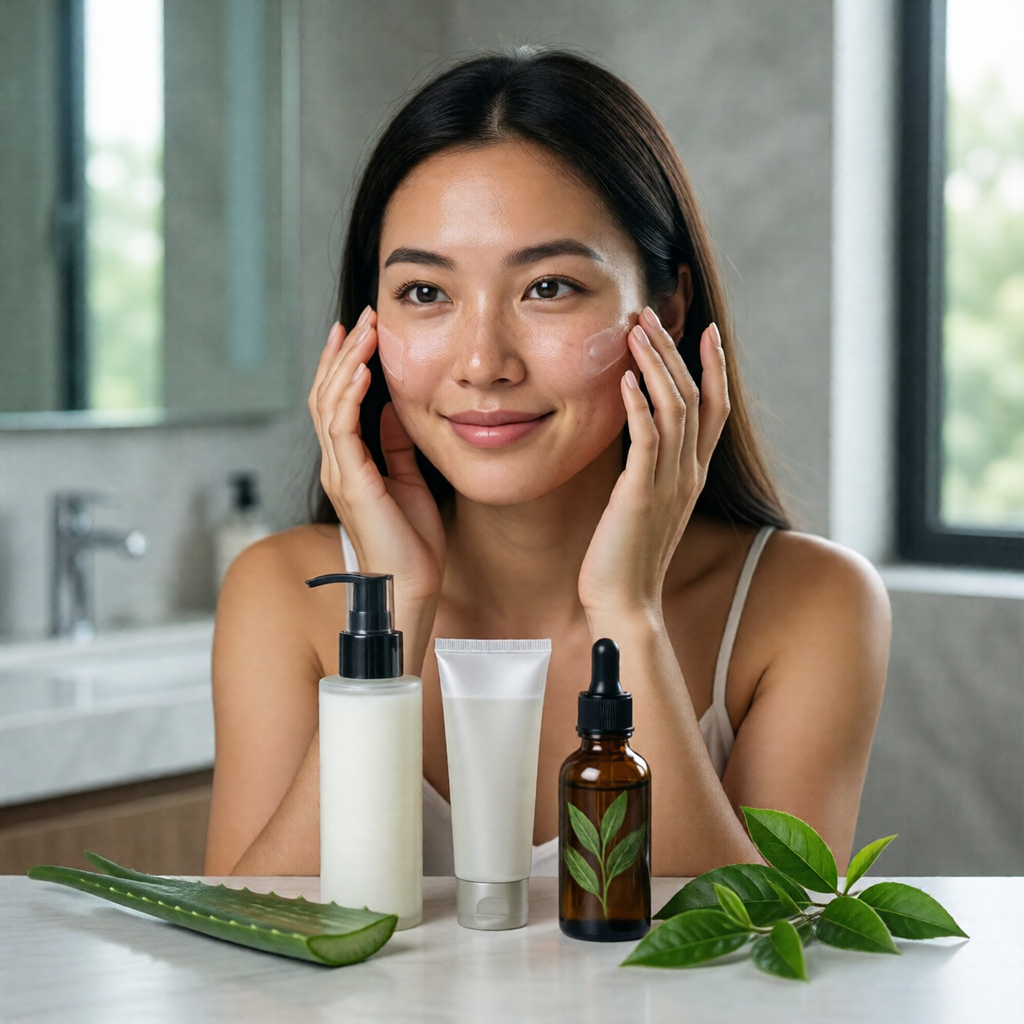
The best approach is to keep your routine simple, understand the ingredients in your products and choose formulations that suit your skin.
Table of Contents
- Understanding Acne-Prone Skin
- Why Choose a Simple Skincare Routine?
- Aloe Vera
- Green Tea
- Jojoba Oil
- Tea Tree
- Natural Clay
- Ingredients to Use With Care
- Building a Routine for Acne-Prone Skin
- Skincare Tips for Singapore’s Climate
- When to Seek Professional Advice
- Conclusion
Understanding Acne-Prone Skin
Acne-prone skin can develop blemishes more frequently than other skin types.
Breakouts may appear as blackheads, whiteheads, pimples or other types of blemishes.
Oil production, blocked pores, hormones and other factors can contribute to acne.
Skincare cannot always prevent acne, but a suitable routine can help keep the skin clean and comfortable without unnecessarily irritating it.
If you regularly experience breakouts, it is important to avoid assuming that stronger or more aggressive skincare will automatically produce better results.
Why Choose a Simple Skincare Routine?
When dealing with acne-prone skin, simplicity can make your routine easier to manage.
Using multiple cleansers, exfoliators, masks, serums and oils at the same time can make it difficult to determine which products are helping or causing irritation.
A basic routine can include a gentle cleanser, lightweight moisturiser and sunscreen.
Additional products can be introduced gradually based on your specific needs.
If you are interested in organic skincare, look for products with clear ingredient information and formulations that are appropriate for your skin type.
Aloe Vera
Aloe vera is a popular botanical ingredient found in many skincare products.
It is commonly used in lightweight gels, moisturisers and facial treatments.
Its refreshing texture can make it appealing for people who prefer lightweight skincare, particularly in warm and humid environments.
When choosing an aloe vera product, check the complete ingredient list. A product containing aloe vera may also contain fragrance, essential oils or other ingredients that may not suit everyone.
Green Tea
Green tea extract is frequently used in skincare because it contains naturally occurring antioxidants.
It can be found in cleansers, serums, moisturisers and masks.
For people with oily or acne-prone skin, lightweight green tea formulations may be an appealing addition to a simple skincare routine.
However, the presence of green tea alone does not determine whether a product is suitable for acne-prone skin. The complete formulation and your individual response are more important.
Jojoba Oil
Jojoba oil is a popular plant-derived ingredient used in facial oils and moisturisers.
It has a relatively lightweight texture compared with some richer oils.
Some people with acne-prone skin may prefer lighter oils, while others may find facial oils unnecessary.
If you are considering adding jojoba oil to your routine, introduce it gradually and observe how your skin responds.
There is no need to use facial oil simply because it is natural or organic.
Tea Tree
Tea tree is commonly used in skincare products designed for blemish-prone skin.
It can be found in cleansers, spot treatments and other cosmetic formulations.
However, concentrated tea tree oil can be irritating if used incorrectly.
Never assume that applying undiluted essential oil directly to your skin is a better approach.
If you want to use a tea tree product, choose a properly formulated cosmetic product and follow its instructions.
People with sensitive skin should be particularly cautious with essential oils.
Natural Clay
Clay is a common ingredient in facial masks.
Clay-based products are often used by people with oily skin because they can help absorb excess surface oil.
However, using clay masks too frequently may leave some skin types feeling dry or uncomfortable.
If you have acne-prone but sensitive skin, consider using clay products less frequently and selecting a gentle formulation.
A clay mask should complement your routine rather than replace daily cleansing and moisturising.
Ingredients to Use With Care
Natural ingredients are not automatically risk-free.
Essential oils, fragrances and highly concentrated botanical extracts can cause irritation or sensitivity for some people.
This is particularly important when dealing with acne-prone skin because excessive irritation can make the skin feel worse.
Avoid applying undiluted essential oils directly to your face.
It is also better to introduce one new product at a time.
If you experience persistent redness, burning or irritation, stop using the product and consider seeking professional advice.
Building a Routine for Acne-Prone Skin
A simple daily routine can provide a good foundation.
Morning
Begin with a gentle cleanser if needed.
Follow with a lightweight moisturiser.
Finish with broad-spectrum sunscreen.
Evening
Cleanse gently to remove daily impurities, sunscreen and makeup if applicable.
Apply a suitable treatment product if recommended for your skin.
Finish with a lightweight moisturiser.
Avoid excessive scrubbing.
Physical scrubs can be too harsh for some acne-prone skin and may increase irritation.
Skincare Tips for Singapore’s Climate
Singapore’s warm and humid environment can make oily skin feel even more uncomfortable.
If your skin becomes shiny during the day, you may be tempted to wash your face repeatedly.
However, excessive cleansing can contribute to dryness and irritation.
Instead, use a gentle cleanser as part of a consistent morning and evening routine.
Lightweight moisturisers may also feel more comfortable in humid weather.
If you spend time outdoors, remember to use sunscreen. Choose a sunscreen that feels comfortable on your skin so that you are more likely to apply it consistently.
When to Seek Professional Advice
Cosmetic skincare products can support a basic skincare routine, but they cannot address every type of acne.
If you experience persistent, painful or severe breakouts, professional medical advice may be appropriate.
A dermatologist or other qualified healthcare professional can assess your skin and recommend suitable treatment options.
This is especially important if acne is leaving significant marks or scarring.
Do not rely solely on natural or organic products when professional treatment may be needed.
Conclusion
Organic skincare can be an appealing choice for people who prefer botanical ingredients and simpler beauty routines.
Ingredients such as aloe vera, green tea, jojoba oil, tea tree and natural clay are commonly found in products marketed for oily or blemish-prone skin.
However, natural and organic ingredients are not automatically suitable for everyone.
The most important steps are to understand your skin, keep your routine simple, introduce new products gradually and pay attention to how your skin responds.
If you are exploring organic skincare for acne-prone skin, focus on gentle formulations and avoid aggressive treatments or excessive product layering.
For persistent or severe acne, professional advice remains the best way to determine appropriate treatment.