Moisturiser is an important part of a daily skincare routine, even if your skin tends to look oily. In fact, skipping moisturiser because of excess oil can sometimes leave your skincare routine feeling unbalanced. The challenge is finding a natural moisturiser that provides comfortable hydration without leaving your face feeling heavy, greasy or congested.
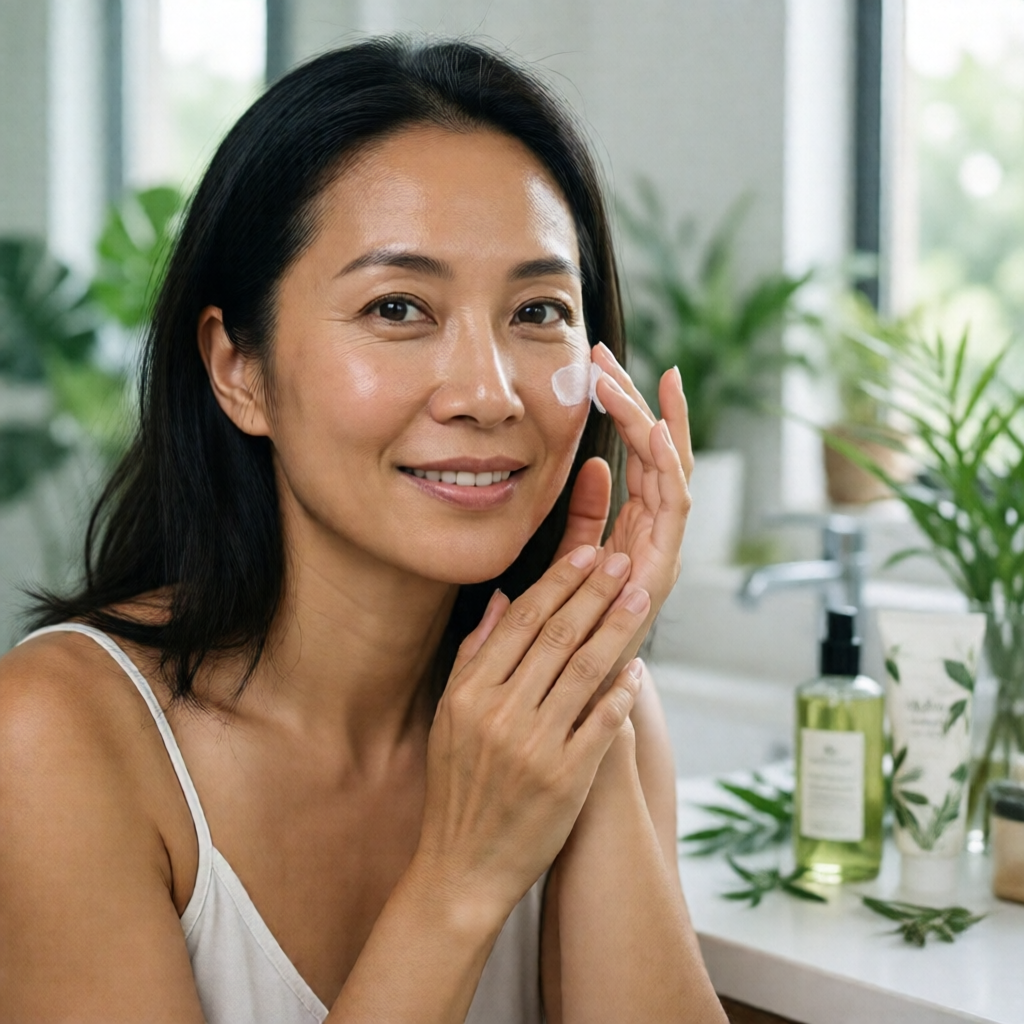
This is particularly relevant in Singapore, where warm temperatures and high humidity can make rich skincare products feel uncomfortable. Choosing the right texture, ingredients and application method can make a significant difference.
Table of Contents
- Why Oily Skin Still Needs Moisturiser
- How to Tell If a Moisturiser Is Too Heavy
- Natural Ingredients to Look For
- Choosing the Right Moisturiser Texture
- How to Apply Moisturiser to Oily Skin
- Natural Moisturiser Ingredients to Consider Carefully
- Moisturiser for Oily and Combination Skin in Singapore
- Common Moisturising Mistakes
- How to Build a Simple Routine
- Final Thoughts
1. Why Oily Skin Still Needs Moisturiser
Oily skin produces more sebum than other skin types, but that does not mean it has all the hydration it needs.
Oil and water serve different functions. Sebum helps provide lubrication and forms part of the skin’s surface barrier, while hydration relates to the skin’s water content.
This means oily skin can still feel tight, uncomfortable or dehydrated.
A suitable moisturiser can help provide hydration and support the skin’s normal barrier function without necessarily making the skin feel greasy.
The goal is therefore not to eliminate every trace of oil. Instead, it is to find a comfortable balance between hydration and the amount of richness your skin needs.
2. How to Tell If a Moisturiser Is Too Heavy
A moisturiser that is too rich for your skin may leave a noticeable film on the face after application.
Some signs that a product may not suit your preferences include:
- A consistently greasy feeling after application
- Makeup becoming difficult to apply
- Skin feeling excessively coated
- Increased discomfort in hot and humid weather
- A texture that remains heavy long after application
However, feeling slightly moisturised immediately after application is not necessarily a problem. Different moisturisers have different textures, and some require a little time to settle.
Your skin type, climate and the other products in your routine should all be considered when choosing a moisturiser.
3. Natural Ingredients to Look For
Natural skincare products can contain many different plant-derived and naturally sourced ingredients. Rather than choosing a product solely because it says “natural”, look at what the formulation is designed to do.
Aloe Vera
Aloe vera is commonly used in lightweight skincare formulations because it provides a fresh, hydrating feel. It can be particularly appealing for people who dislike rich creams.
Jojoba Oil
Jojoba oil is a popular botanical ingredient in skincare. Its relatively lightweight feel makes it an option in moisturising formulations for various skin types.
Squalane
Squalane is commonly used as an emollient to help give skincare products a smooth texture. Plant-derived squalane is frequently found in lightweight moisturisers and facial oils.
Glycerin
Glycerin is a well-known humectant used in many skincare products. It helps attract and retain water at the skin’s surface and can be included in moisturisers designed for both dry and oily skin.
Hyaluronic Acid
Hyaluronic acid is widely used in hydrating skincare formulations. Depending on the overall formulation, products containing it can provide hydration without requiring a heavy cream texture.
Remember that an ingredient being natural or plant-derived does not automatically mean it will work for everyone. Individual skin responses can vary.
4. Choosing the Right Moisturiser Texture
Texture is one of the easiest factors to evaluate when you have oily skin.
Gel Moisturisers
Gel moisturisers are often lightweight and can feel refreshing on the skin. They may be particularly comfortable in warm weather.
Lightweight Lotions
Lotions generally provide more moisture than very light gels while remaining less rich than many traditional creams.
They can be a useful middle ground for combination skin.
Creams
Cream moisturisers can provide a richer feel and may be more appropriate for people with dry areas. However, people with oily skin may prefer applying a smaller amount.
Facial Oils
Facial oils are concentrated emollient products rather than traditional water-based moisturisers. If you enjoy facial oils, use them according to your skin’s needs and consider applying a small amount.
There is no universally correct texture. The right choice depends on your skin and how the product feels after application.
5. How to Apply Moisturiser to Oily Skin
Using too much moisturiser can make even a lightweight product feel heavy.
Start with a small amount and spread it evenly across your face. If your skin still feels dry after the product settles, you can adjust the amount.
A simple approach is:
- Cleanse your face gently.
- Apply a hydrating toner or serum if you use one.
- Allow excess product to settle.
- Apply a small amount of moisturiser.
- During the daytime, finish with sunscreen.
You do not need to apply every product in your collection. A shorter routine can make it easier to identify what works for your skin.
6. Natural Moisturiser Ingredients to Consider Carefully
Natural skincare is not automatically irritation-free.
Some botanical ingredients, particularly highly fragrant essential oils, may not suit everyone. If your skin is sensitive, you may prefer products with simpler formulations and minimal fragrance.
Rich plant oils and butters can also feel too heavy for some oily or combination skin types.
This does not mean these ingredients are inherently unsuitable. Instead, consider the entire formulation, the concentration of individual ingredients and how your skin responds.
When trying a new moisturiser, introducing it gradually can make it easier to identify whether it suits your routine.
7. Moisturiser for Oily and Combination Skin in Singapore
Singapore’s warm and humid climate can influence how skincare products feel throughout the day.
A rich moisturiser that feels comfortable in a cool, dry environment may feel unnecessarily heavy when applied in tropical weather.
For daytime use, many people with oily or combination skin may prefer lightweight formulations that absorb comfortably without leaving a thick layer.
Air conditioning is another consideration. Spending several hours in heavily air-conditioned environments can make some people’s skin feel less comfortable, even when outdoor humidity is high.
Combination skin may also require different approaches for different areas of the face. The T-zone may feel oily while the cheeks feel normal or dehydrated.
Instead of applying the same amount everywhere, you can adjust the quantity according to how each area feels.
8. Common Moisturising Mistakes
Skipping Moisturiser Completely
If your skin is oily, it can be tempting to skip moisturiser. However, oiliness does not necessarily mean that your skin does not need hydration.
Applying Too Much
More product does not automatically mean better hydration. Start with a small amount and add more only when necessary.
Choosing Products Based Only on Marketing
Words such as “natural”, “organic”, “clean” and “botanical” can describe a product’s positioning, but they do not tell you everything about its texture or suitability.
Read the ingredient list and consider what your skin actually needs.
Using a Heavy Moisturiser During the Day
A richer product may be comfortable at night but unnecessary during a hot Singapore afternoon.
Consider using different textures at different times if that works better for your routine.
Changing Products Too Frequently
Constantly switching moisturisers can make it difficult to determine which product your skin actually likes.
Give a new product reasonable time to evaluate its texture and compatibility before immediately replacing it, unless it causes obvious irritation.
9. How to Build a Simple Routine
A simple skincare routine for oily skin does not need to contain numerous products.
A basic daytime routine can include:
Gentle cleanser → lightweight hydrating product → moisturiser → sunscreen
At night, sunscreen can be removed as part of cleansing, followed by your preferred hydrating and moisturising products.
If your skin is already comfortable with this routine, there may be no reason to add several additional products.
The same principle applies to natural skincare. Choosing a smaller number of well-suited products can make your routine easier to maintain.
Pay attention to how your skin feels throughout the day. If your face becomes excessively shiny shortly after applying a product, consider whether the formulation or quantity is too rich for your needs.
10. Final Thoughts
Choosing a natural moisturiser for oily skin is mainly about finding the right balance between hydration, texture and comfort.
Look for lightweight formulations when appropriate, consider ingredients such as aloe vera, glycerin and plant-derived squalane, and avoid assuming that every natural ingredient will work equally well for every person.
Singapore’s warm and humid climate also makes texture particularly important. A lightweight gel or lotion may feel more comfortable during the day, while a richer formulation can be reserved for areas that need additional moisture or for nighttime use.
Most importantly, listen to your skin. A good moisturiser should fit comfortably into your routine rather than making you feel that you have to fight against your skin’s natural characteristics.