Table of Contents
- The Serum Question Everyone in Singapore Is Asking
- What a Serum Actually Is (And What It Is Not)
- Why Serums Matter More in a Tropical Climate Than You Think
- The Problem With Heavy Serums in Singapore’s Heat
- What Lightweight Actives Do That Moisturisers Cannot
- The Best Serum Ingredients for Singapore Skin
- How to Layer a Serum Correctly in a Tropical Routine
- Do You Need More Than One Serum?
- Final Thoughts
The Serum Question Everyone in Singapore Is Asking
Walk into any beauty store in Singapore and the serum shelf is overwhelming. Vitamin C serums, retinol serums, peptide serums, brightening serums, barrier serums, exfoliating serums — the options multiply every year and the price tags climb with them.
So it is a reasonable question: do you actually need one?
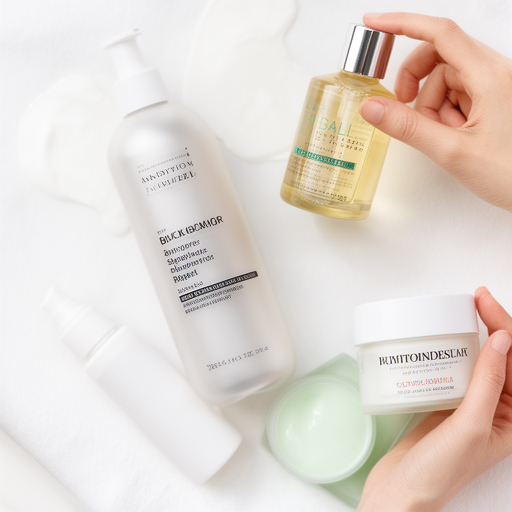
The short answer is yes — but not in the way most beauty marketing suggests. You do not need an expensive serum packed with trending ingredients. You do not need multiple serums layered in a specific order. And you absolutely do not need a thick, oil-rich serum that was formulated for a climate nothing like Singapore’s.
What you do need is a lightweight, well-targeted active that does the specific job your cleanser and moisturiser cannot. In Singapore’s climate, that distinction matters more than almost anywhere else in the world, because the wrong serum does not just fail — it actively works against your skin.
What a Serum Actually Is (And What It Is Not)
A serum is a leave-on skincare product formulated with a high concentration of active ingredients in a lightweight, fast-absorbing base. The base — typically water, aloe, or a light gel — is designed to deliver actives deeper into the skin than a moisturiser can, because it carries less of the thickeners, emollients, and occlusive agents that give moisturisers their texture.
That is the core functional difference. A moisturiser is primarily about creating a protective layer on the skin surface that locks in hydration and shields against environmental stress. A serum is about delivering concentrated actives to where they can actually produce change — in the deeper layers where hydration is regulated, collagen is produced, and pigmentation decisions are made.
What a serum is not: a replacement for moisturiser, a treatment for conditions requiring medical intervention, or a product where more automatically means better. In Singapore’s climate, the temptation to layer multiple actives in search of faster results is one of the most common causes of skin barrier breakdown.
Why Serums Matter More in a Tropical Climate Than You Think
Singapore’s climate creates a specific set of skin challenges that a well-chosen serum addresses more directly than any other product in a basic routine.
Persistent UV exposure accelerates oxidative damage and pigmentation. High humidity combined with daily air-conditioning cycling stresses the skin barrier repeatedly. Sweat, pollution, and heat drive chronic low-grade inflammation that most people experience as dullness, uneven tone, or recurring sensitivity rather than obvious irritation.
A cleanser removes surface impurities. A moisturiser protects the skin surface. But neither delivers the concentrated antioxidant, barrier-repair, or sebum-regulating actives that Singapore skin genuinely benefits from every day.
A lightweight serum fills that gap. Applied between your toner and moisturiser, it delivers targeted benefit to skin that is dealing with more environmental stress than most global skincare brands design for.
The Problem With Heavy Serums in Singapore’s Heat
Not all serums are created equal, and in Singapore’s climate the texture and base of a serum matters as much as its active ingredients.
Oil-based serums — common in the natural and organic skincare space because plant oils carry beneficial fatty acids and antioxidants — can feel luxurious in a temperate climate. In Singapore’s 32°C heat and 84% humidity, the same serum sits heavily on the skin surface, mixes with sweat and sebum, and contributes to the congestion that leads to breakouts.
Thick gel serums with high concentrations of occlusive ingredients face a similar problem. In a dry climate, that occlusion helps seal in moisture. In Singapore’s outdoor humidity, it creates a barrier that traps everything — including oil, dead skin cells, and surface bacteria — against your pores.
Even some water-based serums are formulated with textures that work against tropical skin. Serums designed for anti-ageing in North Asian markets often include rich emollients suited to air-conditioned, low-humidity Korean or Japanese winters rather than Singapore’s dual climate reality.
The standard to look for is a serum that absorbs completely within thirty seconds of application, leaves no detectable residue, and does not change the way your skin feels when you step outside into humidity. If it does any of those things, it is too heavy for daily tropical use.
What Lightweight Actives Do That Moisturisers Cannot
The case for a serum in Singapore’s routine comes down to concentration and penetration.
Moisturisers are primarily occlusive and emollient. Their job is to sit on or near the skin surface and perform a protective function. The active ingredients they contain — if any — are typically present at low concentrations because the formulation priority is texture, spreadability, and surface performance.
A serum inverts those priorities. The formulation is built around the active, and everything else — the base, the texture, the consistency — exists to deliver that active as efficiently as possible.
This means that niacinamide in a serum reaches the skin layers where sebum regulation actually happens, rather than sitting on the surface. Vitamin C in a serum delivers meaningful antioxidant protection against Singapore’s daily UV exposure rather than the trace amounts found in a moisturiser with vitamin C as a secondary ingredient. Hyaluronic acid in a serum hydrates at a structural level rather than simply coating the skin surface.
For skin dealing with Singapore’s daily environmental load, that difference in delivery is not marginal. It is the reason a simple routine with a well-chosen serum consistently outperforms a complex routine built entirely on surface-level products.
The Best Serum Ingredients for Singapore Skin
Niacinamide is the single most versatile active for Singapore’s climate. It regulates sebum production, strengthens the skin barrier, reduces the appearance of enlarged pores, and addresses post-inflammatory hyperpigmentation — the dark marks left behind by breakouts. It is well-tolerated by almost all skin types, works in humid conditions without congesting pores, and delivers visible results with consistent daily use.
Hyaluronic acid in a serum format provides deeper hydration than in a toner or moisturiser. It is particularly valuable for skin that spends long hours in air-conditioned environments where transepidermal water loss is accelerated. Choose a serum with multiple molecular weights of hyaluronic acid for hydration at different skin depths.
Vitamin C as l-ascorbic acid or a stable derivative protects against the oxidative damage caused by Singapore’s UV index, which sits at extreme levels for most of the year. It also addresses pigmentation and dullness — two of the most common skin concerns among people living in tropical climates with high sun exposure.
Centella asiatica in serum concentration — higher than what is typically found in a toner — provides meaningful barrier repair and anti-inflammatory benefit. For skin that is chronically stressed by climate transitions, centella at serum concentration helps break the cycle of low-grade inflammation that drives sensitivity and uneven tone.
Peptides support collagen integrity without the irritation risk of retinol, making them a practical choice for barrier-compromised skin in a tropical climate where retinol’s photosensitising effects require careful management.
How to Layer a Serum Correctly in a Tropical Routine
Sequence and timing both matter when applying a serum in Singapore’s climate.
Apply your serum after your hydrating toner and before your moisturiser. The toner creates a hydrated surface that helps the serum absorb evenly. The moisturiser applied on top seals in what the serum has delivered without interfering with its penetration.
Use the smallest effective amount — typically three to four drops for the full face. Press the serum gently into the skin rather than rubbing it, and allow it to absorb fully before applying your moisturiser. In Singapore’s heat, this usually takes twenty to thirty seconds for a well-formulated lightweight serum.
Do not apply serum to completely dry skin immediately after cleansing without a toner step. On a dry surface in warm air, some actives — particularly vitamin C — can cause temporary stinging or uneven absorption. The toner step solves this.
Do You Need More Than One Serum?
In most cases, no — and in Singapore’s climate specifically, restraint is a genuine skincare virtue.
Every additional product you layer increases the risk of interaction between ingredients, adds to the total occlusion on your skin surface, and makes it harder to identify what is working and what is causing a problem if your skin reacts.
A single well-chosen serum that addresses your primary skin concern — whether that is sebum regulation, hydration, brightening, or barrier repair — will deliver better results with less risk than two or three serums layered together.
If your skin has stabilised on a single serum and you want to address a secondary concern, introduce a second product slowly and separately, not simultaneously. For organic skincare in Singapore that takes a minimal, targeted approach to actives, the principle is the same one that drives every effective tropical routine: fewer well-chosen products, applied consistently, outperform complexity every time.
Final Thoughts
You do need a serum — but you need the right one, applied the right way, in a formulation that actually suits Singapore’s climate.
A lightweight serum with a targeted active delivers what your cleanser and moisturiser cannot reach. It addresses the specific skin challenges that tropical living creates: UV damage, sebum imbalance, barrier stress, and the chronic low-grade inflammation that makes skin look dull and feel reactive.
Keep it simple. One serum, chosen for your primary concern, applied twice daily between your toner and moisturiser. In Singapore’s demanding climate, that single well-placed step is often the difference between a routine that manages your skin and one that genuinely improves it.