Dry and dehydrated skin are often treated as if they mean the same thing, but they describe different skin concerns. Dry skin generally relates to a lack of oil, while dehydrated skin refers to insufficient water in the outer layers of the skin.
Understanding the difference can make it easier to choose suitable skincare products and avoid using products that do not address what your skin actually needs.
This distinction is particularly useful in Singapore, where skin is exposed to a combination of hot, humid outdoor conditions and prolonged air-conditioned indoor environments. Your skin can feel oily on the surface while still experiencing dehydration underneath.
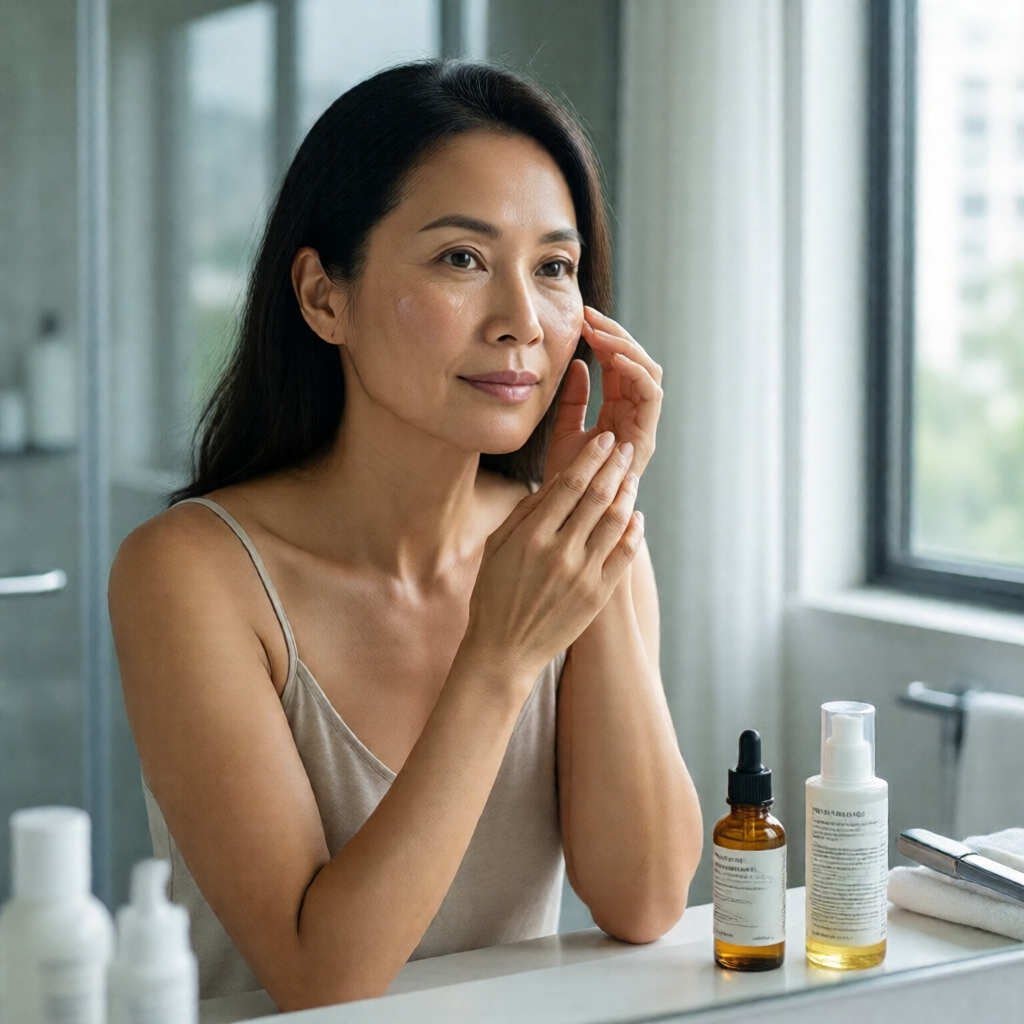
A simple way to approach the issue is to observe how your skin looks and feels, then build a routine around gentle cleansing, hydration, moisturising, and consistent sun protection.
Table of Contents
- Dry Skin vs Dehydrated Skin
- What Does Dry Skin Look and Feel Like?
- What Does Dehydrated Skin Look and Feel Like?
- Can Oily Skin Be Dehydrated?
- Common Causes of Dehydrated Skin
- Common Causes of Dry Skin
- How to Identify What Your Skin Needs
- Natural Ingredients for Dehydrated Skin
- Natural Ingredients for Dry Skin
- Building a Simple Skincare Routine
- Common Mistakes to Avoid
- Final Thoughts
1. Dry Skin vs Dehydrated Skin
The simplest distinction is that dry skin is generally a skin type, while dehydration is a temporary condition.
Dry skin tends to produce less natural oil than other skin types. It may feel rough, tight, or flaky and may benefit from richer moisturising products.
Dehydrated skin lacks sufficient water. This can happen to people with dry, normal, combination, or oily skin.
This means that someone can have naturally oily skin while experiencing dehydration at the same time.
Understanding this difference prevents a common mistake: assuming that oily skin needs to be stripped of moisture.
2. What Does Dry Skin Look and Feel Like?
Dry skin often feels tight, particularly after cleansing.
Other common characteristics can include rough texture, visible flaking, and a tendency to feel uncomfortable after washing.
Makeup may also appear uneven when applied over very dry areas.
Dry skin generally benefits from products that help soften the skin and reduce excessive moisture loss. Richer creams and suitable emollient ingredients may therefore feel more comfortable than very lightweight products.
However, not every person with dry skin needs an extremely heavy moisturiser. The ideal texture depends on the individual and the environment.
3. What Does Dehydrated Skin Look and Feel Like?
Dehydrated skin can sometimes be harder to recognise.
The skin may look dull or tired and feel tight despite producing oil. Fine lines may appear more noticeable temporarily, particularly when the skin is lacking hydration.
Some people may notice that their skin feels comfortable immediately after moisturising but becomes tight again later.
Dehydration can also affect different areas of the face differently. For example, the T-zone may appear oily while the cheeks feel tight.
This combination can be confusing, but it is possible for oily or combination skin to be dehydrated.
4. Can Oily Skin Be Dehydrated?
Yes.
Oil and water are not the same thing.
A person can produce plenty of sebum while still having insufficient water in the outer layers of the skin. In some cases, people respond to oiliness by using stronger cleansers or washing more frequently, which may leave the skin feeling increasingly uncomfortable.
Instead of attempting to remove every trace of oil, consider whether your routine is providing enough hydration and appropriate moisturisation.
Lightweight hydrating products can often be incorporated without creating a heavy feeling.
5. Common Causes of Dehydrated Skin
Many everyday factors can contribute to skin feeling dehydrated.
Air conditioning is one consideration for people who spend long hours indoors. Frequent cleansing, hot water, over-exfoliation, and unsuitable skincare products can also leave the skin feeling dry or uncomfortable.
Environmental conditions and sun exposure may also affect the way skin feels.
Another common issue is simply not using an appropriate moisturiser after cleansing.
Rather than focusing on a single cause, consider your complete routine and environment.
For Singapore residents, the contrast between humid outdoor conditions and air-conditioned indoor spaces can make choosing comfortable skincare textures particularly important.
6. Common Causes of Dry Skin
Dry skin is generally associated with lower oil production.
Some people naturally have dry skin, while others may notice increased dryness during certain periods or as their skin changes over time.
Harsh cleansing products, frequent hot showers, and low-humidity environments can also make dry skin feel more uncomfortable.
The solution is usually not to apply increasingly large amounts of product. A consistent routine using gentle cleansing and an appropriate moisturiser can provide a more practical approach.
7. How to Identify What Your Skin Needs
One useful way to understand your skin is to observe how it behaves after cleansing.
If your entire face quickly feels tight and rough, you may be experiencing dryness.
If your skin becomes oily but still feels tight or looks dull, dehydration may be contributing to the problem.
If only certain areas feel uncomfortable while others remain oily, you may have combination skin with some degree of dehydration.
These observations are not a medical diagnosis, but they can help you make more informed skincare choices.
Pay attention to how your skin responds over several days rather than judging it based on a single morning.
8. Natural Ingredients for Dehydrated Skin
Dehydrated skin often benefits from water-attracting ingredients known as humectants.
Glycerin is commonly used in moisturisers because it helps attract and retain water.
Hyaluronic acid is another widely used hydrating ingredient found in serums and moisturisers.
Aloe vera is also popular in lightweight skincare formulations and can provide a refreshing, hydrating feel.
These ingredients are often suitable for people who want hydration without a particularly oily texture.
When choosing organic or natural skincare, look at the entire formulation rather than selecting products based solely on one ingredient.
9. Natural Ingredients for Dry Skin
Dry skin may benefit from emollient and moisturising ingredients that help soften the skin.
Plant-derived oils such as jojoba oil are commonly used in natural skincare. Squalane can also be found in products designed to provide a lightweight emollient effect.
For particularly dry areas, richer ingredients such as shea butter may provide greater comfort.
The best option depends on how your skin feels and the climate in which you live.
If a product leaves your face excessively greasy, try a lighter texture or reduce the amount used rather than assuming that your skin requires more oil.
10. Building a Simple Skincare Routine
A basic routine can address both hydration and dryness without becoming complicated.
Morning
Begin with a gentle cleanser if necessary.
Apply a lightweight hydrating product if your skin needs additional hydration.
Follow with a moisturiser appropriate for your skin type.
Finish with broad-spectrum sunscreen.
Evening
Remove makeup and sunscreen appropriately.
Cleanse gently without excessive rubbing.
Apply a hydrating serum or moisturiser if required.
Finish with your regular moisturiser.
If your skin is dry, you may prefer a richer evening moisturiser than the one used during the day.
11. Common Mistakes to Avoid
One of the most common mistakes is treating all oily skin as if it is excessively moisturised.
If your skin is oily but feels tight, adding suitable hydration may be more appropriate than repeatedly using harsh cleansers.
Another mistake is confusing a temporary dehydrated condition with your permanent skin type.
Over-exfoliation is another issue. Exfoliating more frequently does not necessarily make skin smoother and can leave it feeling uncomfortable.
It is also important not to introduce multiple new products simultaneously. If your skin reacts, it becomes difficult to identify which product may have caused the problem.
Finally, remember that natural and organic products can still contain ingredients that some individuals do not tolerate well. Patch testing new products can be useful, particularly if your skin is sensitive.
12. Final Thoughts
Dry skin and dehydrated skin are related but different concerns.
Dry skin generally refers to a lower level of natural oil, while dehydration refers to a lack of water in the skin. This distinction explains why even oily or combination skin can sometimes feel tight, dull, or uncomfortable.
If your skin is dehydrated, lightweight hydrating ingredients such as glycerin, hyaluronic acid, and aloe vera may be useful components of a skincare routine.
If your skin is genuinely dry, emollient ingredients such as jojoba oil, squalane, and shea butter may provide additional softness and comfort.
The most practical approach is to keep your routine gentle and consistent. Observe how your skin behaves, choose products according to your actual needs, and avoid automatically adding more products whenever your skin feels different.
For people living in Singapore, a balanced routine that works comfortably in both humid outdoor conditions and air-conditioned indoor environments can make daily skincare easier to maintain.