• Skip to primary navigation
  • Skip to main content
  • HOME
  • SHOP
    • Cleanser
    • Serum
    • Day Cream
    • Toner
  • OUR STORY
  • BLOG
  • HOME
  • SHOP
    • Cleanser
    • Serum
    • Day Cream
    • Toner
  • OUR STORY
  • BLOG

organic skincare

Organic Skincare vs. Natural Skincare: What’s the Difference?

June 1, 2025 by admin

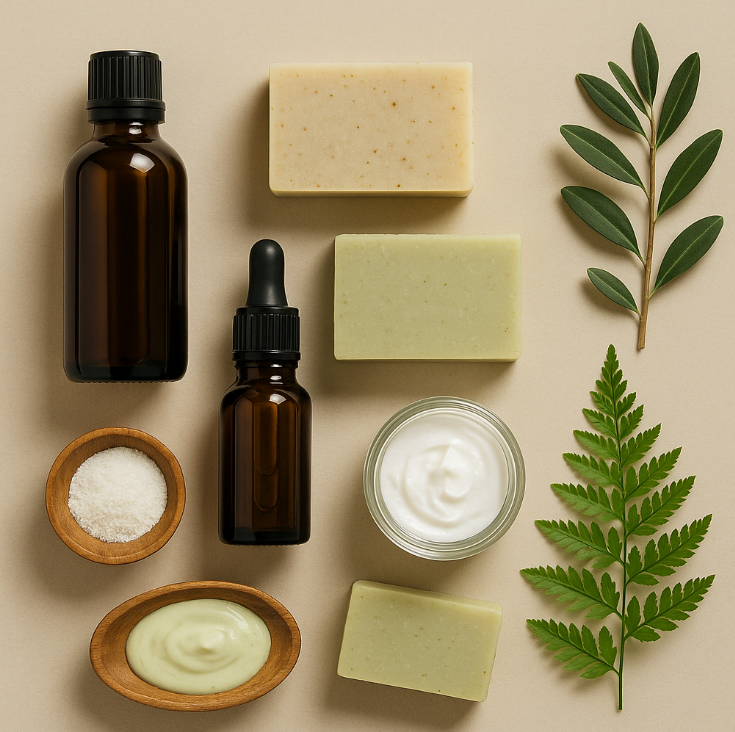
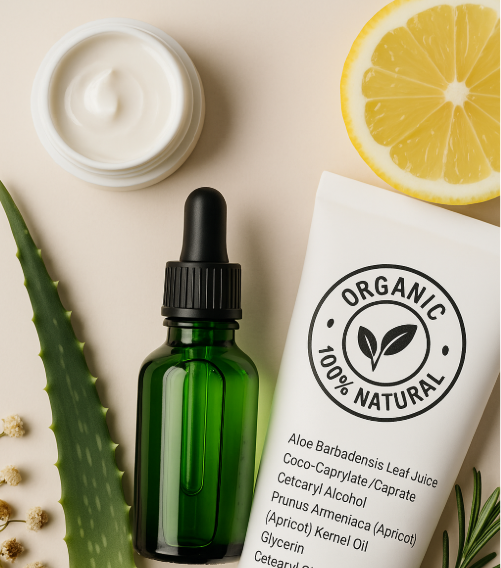
In the world of beauty and personal care, the buzz around “clean,” “green,” “natural,” and “organic” skincare continues to grow louder. These terms are everywhere—on product labels, in influencer routines, and across wellness blogs. But while they may seem interchangeable, there’s a critical difference between organic and natural skincare. Understanding that difference can help you make informed choices that align with your values and skin health goals.

Let’s dive into what truly sets organic skincare apart from natural skincare—and why it matters.

Understanding Natural Skincare

What Does “Natural” Mean in Skincare?

The term “natural” in skincare usually refers to products that are made with ingredients derived from nature—plants, minerals, or animal by-products. Think shea butter, essential oils, aloe vera, beeswax, and clay. These ingredients are minimally processed and, ideally, free from synthetic chemicals, preservatives, and artificial fragrances.

But here’s the catch: “natural” isn’t a regulated term in the cosmetic industry in many countries, including the U.S. That means companies can label their products as “natural” even if they contain synthetic preservatives or fragrances, as long as some ingredients are derived from natural sources.

Pros of Natural Skincare

  • Derived from nature, often with minimal processing.
  • Gentle and nourishing for many skin types.
  • May contain powerful antioxidants, vitamins, and essential fatty acids.

Cons of Natural Skincare

  • Lack of regulation can be misleading.
  • Not always eco-conscious or sustainably sourced.
  • May still contain harmful additives or allergens.

Understanding Organic Skincare

What Does “Organic” Mean in Skincare?

Organic skincare goes a step further than natural. It not only contains ingredients sourced from nature but also ensures those ingredients are grown without the use of synthetic fertilizers, pesticides, GMOs, or other harmful chemicals. For a product to be truly organic, the farming practices behind its ingredients must follow strict standards, and in many cases, be certified by recognized organizations (such as USDA Organic or COSMOS).

A certified organic skincare product will often contain a high percentage of organic ingredients, and many brands proudly display their certifications on the label.

Pros of Organic Skincare

  • Ingredients are cultivated using environmentally friendly, sustainable farming practices.
  • Free from pesticides, synthetic chemicals, and GMOs.
  • Often safer and less irritating for sensitive skin.
  • Regulated by third-party certification organizations.

Cons of Organic Skincare

  • Can be more expensive due to stricter regulations and quality sourcing.
  • May have a shorter shelf life due to fewer preservatives.
  • Not all “organic” claims are certified—look for third-party seals.

The Key Differences

  1. Ingredient Sourcing and Farming Practices

Natural skincare may use ingredients sourced from plants or minerals, but there’s no guarantee about how those ingredients were grown. They might come from conventional farms using pesticides or chemical fertilizers.

Organic skincare, by contrast, requires ingredients to be grown under certified organic farming practices, which exclude synthetic pesticides, herbicides, and GMOs. This not only makes it safer for your skin but also better for the environment.

  1. Regulations and Certifications

As mentioned, “natural” is a loosely regulated term. A product could be 90% synthetic and still claim to be natural if it contains a plant extract. With organic products, there are stricter regulations, especially if brands seek certification from authorities like USDA Organic, Soil Association, or ECOCERT.

These certifications evaluate the product’s ingredient list, manufacturing processes, and packaging to ensure they align with organic principles.

  1. Labeling Transparency

Natural products often lack transparency. A brand might claim to be natural while still including synthetic fragrances, parabens, or phthalates. Without regulation, the term can be misleading.

Organic products tend to be more transparent—especially certified ones. Look for the percentage of organic content on the label (e.g., “95% organic ingredients”) and legitimate seals from certification bodies.

  1. Effectiveness and Potency

There’s a misconception that organic or natural products aren’t as effective as synthetic ones. But that’s far from true. Organic skincare often contains higher concentrations of active ingredients—like cold-pressed oils, botanical extracts, and plant-based actives—that are rich in nutrients, antioxidants, and vitamins.

However, effectiveness also depends on formulation. Just because something is organic doesn’t automatically make it better—it still needs a well-designed formula suited to your skin type.

  1. Environmental Impact

Organic farming is kinder to the planet. It reduces pollution, conserves water, and improves soil health by avoiding toxic chemicals. If sustainability is important to you, organic skincare is the more eco-conscious option.

Natural skincare can also be sustainable—but only if the ingredients are ethically sourced and the brand practices eco-responsible manufacturing and packaging.


Common Myths Debunked

Myth 1: Natural and Organic Mean the Same Thing

This is probably the most common misconception. As discussed, not all natural products are organic, and not all organic products are completely natural (they may include safe, lab-developed ingredients necessary for stability and safety).

Myth 2: Organic Products Are Always Better

While organic products are often safer and cleaner, they may not be the best fit for everyone. For instance, someone allergic to essential oils or plant-based ingredients might react negatively to an organic serum.

Myth 3: Organic Skincare Doesn’t Work as Well

Thanks to advancements in green chemistry and sustainable sourcing, organic skincare has become just as effective—if not more—than conventional options. You’ll find powerful anti-aging, hydrating, and brightening organic products that rival high-end synthetic brands.


What to Look for on Labels

To shop smartly, especially when choosing organic skincare, here’s what you should pay attention to:

  • Certification Logos: USDA Organic, COSMOS, ECOCERT, Soil Association.
  • Ingredient List: Look for Latin (botanical) names and transparent descriptions.
  • Percentage of Organic Ingredients: Some products may say “made with organic ingredients” but only contain a small amount. Look for 70% or more for higher purity.
  • No Hidden Toxins: Watch for synthetic fragrances, parabens, sulfates, and petrochemicals.
  • Expiration Date: Organic products may expire sooner due to fewer preservatives.

Which Is Better for You?

Choosing between natural and organic skincare isn’t about picking a “winner.” It’s about being informed.

If you want clean ingredients but don’t mind a little synthetic support, high-quality natural skincare may be right for you. But if your priorities are sustainability, purity, and minimal exposure to chemicals, certified organic skincare is worth the investment.

Ultimately, read the labels, understand the brand’s philosophy, and choose what aligns with your values and works for your skin. Your skin, health, and the planet will thank you.
Filed Under: organic skincare

10 Harmful Ingredients to Avoid in Non-Organic Skincare

May 25, 2025 by admin

Navigating the world of skincare can be overwhelming, especially with the number of unpronounceable ingredients packed into conventional products. While many mainstream skincare formulas promise instant results, they often contain chemicals that can do more harm than good over time. Switching to organic skincare is not just a trend—it’s a decision grounded in protecting your skin’s health and overall well-being.

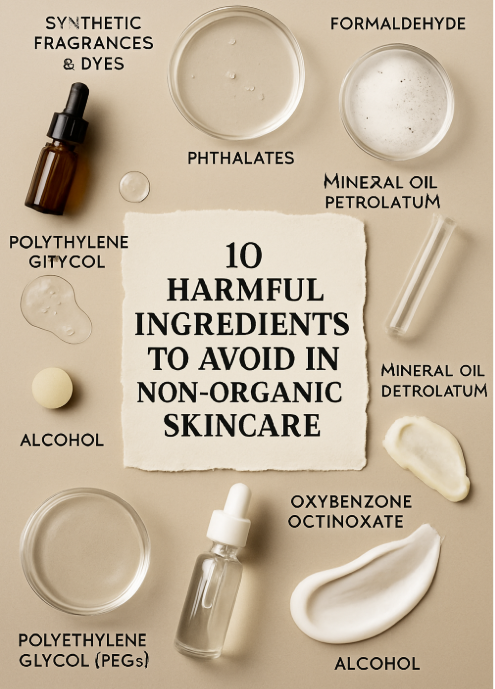
Here are ten harmful ingredients commonly found in non-organic skincare products that you should consider avoiding:

10 Harmful Ingredients to Avoid in Non-Organic Skincare

1. Parabens (Methylparaben, Propylparaben, Butylparaben, Ethylparaben)

Parabens are widely used as preservatives to extend the shelf life of skincare products. However, they mimic estrogen in the body, which has raised concerns about their potential role in hormone disruption and increased risk of breast cancer. While the evidence is still debated, many consumers and natural brands choose to err on the side of caution by eliminating parabens altogether. Opt for products labeled “paraben-free” to reduce your exposure.


2. Phthalates (Often Hidden Under ‘Fragrance’)

Phthalates are a group of chemicals used to increase the flexibility and longevity of fragrances and plastics. In skincare, they often hide under the term “fragrance” or “parfum.” Phthalates are known endocrine disruptors and have been linked to developmental and reproductive toxicity. Since they are rarely listed directly, avoiding synthetic fragrances altogether is the best defense.


3. Sodium Lauryl Sulfate (SLS) / Sodium Laureth Sulfate (SLES)

These surfactants are responsible for the foaming and cleansing action in many face washes, body washes, and shampoos. Unfortunately, they can strip your skin of its natural oils, leading to dryness, irritation, and disruption of the skin barrier. SLS has also been shown to be a skin irritant, particularly for people with sensitive skin, eczema, or rosacea.


4. Formaldehyde and Formaldehyde-Releasing Preservatives (DMDM Hydantoin, Imidazolidinyl Urea, Quaternium-15)

Formaldehyde is a known human carcinogen. Though it’s rarely used directly in skincare today, many preservatives release small amounts of formaldehyde over time to prevent microbial growth. These compounds can cause skin sensitivity, allergic reactions, and cumulative health effects with prolonged use. Always check the ingredient list for hidden formaldehyde releasers.


5. Mineral Oil and Petrolatum

Derived from petroleum, these ingredients are commonly used as moisturizers and occlusives. While they do create a barrier on the skin, locking in moisture, they can also clog pores and prevent the skin from “breathing.” More concerning is that unless fully refined, these substances may contain carcinogenic impurities. Organic alternatives like shea butter, coconut oil, and jojoba oil offer similar benefits without the risk.


6. Triclosan

Triclosan is an antimicrobial agent found in products marketed as antibacterial. It has been linked to hormone disruption, antibiotic resistance, and environmental harm, especially aquatic toxicity. The FDA has banned triclosan in hand soaps in the U.S., but it can still be found in some skincare items and cosmetics. Always read labels carefully and choose products labeled as “triclosan-free.”


7. Synthetic Fragrances and Dyes

Artificial fragrances and dyes are added to skincare for aesthetic appeal but can be irritating to sensitive skin and cause allergic reactions. Fragrance formulations are considered trade secrets, so companies aren’t required to disclose specific ingredients. Many synthetic scents contain phthalates and other toxic compounds. Natural essential oils or unscented products are safer alternatives.


8. Polyethylene Glycol (PEGs)

PEGs are used as thickeners, softeners, and penetration enhancers in many creams and lotions. The concern with PEGs lies in their potential contamination with ethylene oxide and 1,4-dioxane—both known carcinogens. Additionally, PEGs can make the skin more permeable, potentially allowing other harmful chemicals to penetrate more deeply into the skin.


9. Oxybenzone and Octinoxate

Common in chemical sunscreens, these UV filters have been found to disrupt hormones and cause allergic skin reactions. They are also harmful to marine life and contribute to coral reef bleaching. Some countries have already banned these ingredients in sunscreen. Look for mineral sunscreens with zinc oxide or titanium dioxide instead—both of which are safer and reef-friendly.


10. Alcohol (Denatured Alcohol, Isopropyl Alcohol, Ethanol)

Alcohol is often included in skincare to give a light, fast-drying feel and to help other ingredients penetrate the skin. However, high concentrations of alcohol can dry out the skin, strip it of its natural oils, and weaken the skin’s protective barrier. This can lead to increased sensitivity, inflammation, and breakouts. Opt for alcohol-free products or those that use fatty alcohols like cetyl or stearyl alcohol, which are less drying and more skin-friendly.


Why Organic Skincare Is the Safer Choice

Organic skincare products are formulated without these harmful chemicals and prioritize plant-based, naturally derived ingredients. They often use natural preservatives, essential oils for fragrance, and cold-pressed oils or botanical extracts to nourish the skin. This not only reduces the risk of irritation and long-term health consequences but also supports a more sustainable, environmentally friendly approach to beauty.

Moreover, organic certifications—like USDA Organic, COSMOS, or ECOCERT—help ensure that the product meets certain standards in terms of ingredient sourcing, production practices, and absence of toxic chemicals. Reading labels, researching ingredients, and understanding certifications can empower you to make better choices for your skin and the planet.


Final Thoughts

The next time you pick up a skincare product, turn it over and read the label. By being aware of the top ten harmful ingredients in non-organic skincare, you’re taking a critical step in protecting your skin health and overall wellness. Clean, conscious beauty is more than just a buzzword—it’s a commitment to safer, more effective, and more sustainable self-care.

Switching to organic skincare isn’t just about avoiding harm—it’s about actively choosing nourishment, integrity, and long-term wellness for your skin. With so many natural alternatives now available, there’s never been a better time to go clean and green.

Filed Under: organic skincare

What Makes Skincare Truly Organic? How to Read Product Labels Like a Pro

May 17, 2025 by admin

The world of skincare can be overwhelming — even more so when you’re trying to go “organic.” You’ve probably picked up a product labeled “natural,” “clean,” or “green” and assumed it’s good for you. But did you know those terms aren’t strictly regulated? In truth, many products marketed as “organic” might not be as pure as they seem. So how do you know if a skincare product is truly organic?

Let’s break it down: what organic skincare really means, why it matters, and — most importantly — how to confidently read product labels like a pro.


What Does “Organic” Skincare Actually Mean?

In skincare, “organic” refers to ingredients that are grown and processed without synthetic chemicals, pesticides, or genetically modified organisms (GMOs). Think of it like organic food — it’s about farming practices that are kind to your body and the planet.

However, here’s the catch: skincare isn’t regulated the same way food is. In the U.S., for instance, the FDA doesn’t have a strict legal definition for “organic” skincare. Instead, the USDA steps in — but only if a product claims to be USDA Organic.

This means many brands can call a product “organic” even if only a small percentage of the ingredients are actually organic. That’s why learning to decode labels is essential.


Why Does It Matter If It’s Truly Organic?

Using truly organic skincare products can have several benefits:

  • Fewer harmful chemicals: You avoid synthetic preservatives, parabens, sulfates, and artificial fragrances, which can irritate the skin or disrupt hormones.
  • Gentler on sensitive skin: Organic products often have simpler ingredient lists, which is great for sensitive or allergy-prone skin.
  • Eco-friendly: Organic farming reduces pollution, conserves water, and promotes biodiversity.

But if the label is misleading, you might not be getting any of these benefits. That’s why label literacy matters.


Step 1: Look for Certifications

One of the easiest ways to verify a product’s organic status is to look for third-party certifications. These seals show the product has been vetted by a regulatory body. Common organic certifications include:

  • USDA Organic (United States): Products must contain at least 95% certified organic ingredients (excluding water and salt). This is the gold standard.
  • COSMOS Organic (Europe): Requires 95% of physically processed agro-ingredients to be organic.
  • Ecocert: At least 95% of the total ingredients must be natural, and at least 10% must be organic by weight.

Red flag: If a product uses vague claims like “made with organic ingredients” without a certification seal, it might only contain one or two organic components.


Step 2: Read the Ingredient List — Not Just the Marketing

The front of the packaging is all about marketing. Flip it over to see the real story. Ingredient labels (also known as INCI — International Nomenclature of Cosmetic Ingredients) list items in descending order by concentration. Here’s how to decode it:

1. Top 5 Ingredients Matter Most

If “aqua” (water) is listed first, that’s okay — most skincare products are water-based. But you should start seeing plant-based extracts, oils, or hydrosols high on the list. If the organic ingredients only appear near the bottom, they’re likely in low concentration.

2. Botanical Names Are a Good Sign

Truly natural and organic products often list botanical ingredients with their Latin names, followed by the common name in parentheses. For example:

Lavandula angustifolia (Lavender) Flower Extract

Bonus: Sometimes the ingredient is followed by “*” or “†” to indicate it’s organic — check for a key on the label.

3. Avoid These Common Non-Organic Additives

Watch out for these ingredients, which are not typically found in certified organic skincare:

  • Parabens (methylparaben, propylparaben): Synthetic preservatives
  • Phthalates: Often hidden under “fragrance” or “parfum”
  • Sulfates (SLS, SLES): Harsh foaming agents
  • PEGs: Petroleum-based compounds
  • Synthetic colors/fragrances: Listed as “FD&C” or “fragrance”

Step 3: Know the Lingo — And What to Ignore

Here’s a quick cheat sheet of marketing claims — and how much weight they actually carry:

ClaimWhat It Really Means
OrganicOnly valid if there’s a certification; otherwise, it may be unregulated
NaturalUnregulated — could mean anything
CleanNot a legal term; usually brand-defined
Cruelty-freeNot related to organic — means not tested on animals
VeganNo animal-derived ingredients, but doesn’t mean organic or natural
Non-toxicVague; no official definition in cosmetics

Pro Tip: Always look beyond buzzwords. If there’s no certification and the ingredient list doesn’t support the claim, think twice.


Step 4: Understand Shelf Life and Packaging

Organic skincare often has a shorter shelf life because it’s free from synthetic preservatives. Look for the Period After Opening (PAO) symbol — a small jar icon with a number like “6M” or “12M,” indicating how long the product is good after opening.

Also, packaging matters. Dark glass bottles or airless pumps help protect delicate organic ingredients from light and air, preserving potency.


Step 5: Do a Patch Test and Track Results

Even organic ingredients can cause reactions — especially if you have allergies or sensitive skin. Always patch test a new product on your inner arm before applying it to your face.

Keep a skincare journal to track how your skin reacts to new organic products. Sometimes, your skin needs time to detox from synthetic ingredients before it adjusts.


Become a Smart Skincare Shopper

Choosing truly organic skincare is empowering, but it takes a little education and awareness. By learning how to decode product labels, recognize certifications, and spot marketing fluff, you become a savvy, conscious consumer — and your skin will thank you.

Filed Under: organic skincare

The Rise of Organic Skincare: A Return to Nature in Modern Beauty

May 11, 2025 by admin


In recent years, organic skincare has gained remarkable traction in the beauty and wellness industry. What was once considered a niche market is now a growing global movement, driven by increasing consumer awareness, environmental consciousness, and a desire for more transparent, health-conscious products. Organic skincare represents a shift toward formulations derived from naturally grown, minimally processed ingredients — a return to simplicity in an age dominated by synthetic compounds and chemical-laden beauty routines.

The Rise of Organic Skincare: A Return to Nature in Modern Beauty

Defining Organic Skincare

Organic skincare refers to cosmetic and personal care products made primarily from ingredients cultivated without synthetic fertilizers, pesticides, genetically modified organisms (GMOs), or artificial additives. These ingredients — often plant-based oils, herbs, fruits, clays, and botanical extracts — are processed using methods that preserve their natural integrity and beneficial properties.

To be labeled “organic,” products typically must meet certification standards set by regulatory bodies such as the USDA (United States Department of Agriculture), ECOCERT, or COSMOS. These organizations evaluate not only the origin of ingredients but also the production methods, packaging materials, and environmental impact of the brand.

It is important to distinguish between “organic” and “natural” skincare. While the terms are often used interchangeably, “natural” is a less regulated term that simply implies ingredients derived from nature. A product labeled natural may still contain synthetic preservatives or additives unless otherwise specified.

Why Consumers Are Choosing Organic

Several factors are fueling the shift toward organic skincare:

1. Health and Safety Concerns

Traditional skincare products often contain synthetic chemicals such as parabens, phthalates, sulfates, and artificial fragrances. These compounds have been linked to skin irritation, allergic reactions, hormone disruption, and even potential long-term health risks. While regulatory agencies deem many of these substances safe in small quantities, growing concern over cumulative exposure has prompted many consumers to seek out gentler, cleaner alternatives.

Organic skincare typically avoids such additives, focusing instead on non-toxic, hypoallergenic ingredients that are less likely to cause adverse effects. For individuals with sensitive skin, eczema, rosacea, or acne, organic formulations can often offer relief without triggering inflammation or sensitivity.

2. Environmental Sustainability

Conventional beauty products frequently rely on ingredients and production practices that harm the environment — from petroleum-derived compounds and microplastics to unsustainable palm oil harvesting and excessive packaging waste.

By contrast, certified organic skincare brands emphasize environmentally responsible sourcing and manufacturing. Ingredients are often farmed using regenerative or organic agricultural methods that support soil health, conserve biodiversity, and reduce chemical runoff. Many brands also use biodegradable packaging, offer refillable containers, or contribute to reforestation and ocean-cleanup initiatives.

3. Transparency and Ethical Practices

Modern consumers increasingly demand honesty and integrity from the companies they support. Organic skincare brands often align with values such as cruelty-free testing, fair trade sourcing, vegan formulations, and social impact initiatives. These ethical considerations resonate with a growing demographic of conscious consumers who want their purchasing decisions to reflect their personal values.

4. Holistic and Preventative Skincare

Organic skincare embraces a holistic philosophy that sees the skin not merely as a surface to be treated, but as a living organ that reflects one’s overall health and lifestyle. Rather than masking symptoms or providing quick fixes, organic products aim to nourish the skin from the inside out — supporting its natural barrier, microbiome, and regenerative abilities.

Many organic ingredients, such as chamomile, calendula, aloe vera, and rosehip oil, offer not only cosmetic benefits but also therapeutic properties. They soothe, repair, and hydrate while delivering antioxidants, vitamins, and essential fatty acids that promote long-term skin health.

Common Ingredients in Organic Skincare

Organic skincare products utilize a diverse array of natural ingredients, often selected for their potency and compatibility with human skin. Common examples include:

  • Aloe Vera – Known for its soothing, anti-inflammatory, and hydrating properties.
  • Jojoba Oil – A lightweight oil that closely resembles the skin’s natural sebum.
  • Shea Butter – Rich in vitamins A and E, it provides intense moisture and healing benefits.
  • Green Tea Extract – Packed with antioxidants that help protect against free radical damage.
  • Witch Hazel – A natural astringent that reduces inflammation and tones the skin.
  • Essential Oils – Lavender, tea tree, and frankincense are used for their aromatic and therapeutic effects (though they should be used with caution and proper dilution).

The Challenges of Organic Skincare

While the benefits of organic skincare are significant, there are also challenges to consider.

Shelf Life and Stability

Without synthetic preservatives, organic products may have a shorter shelf life and require refrigeration or careful storage. Consumers must pay attention to expiration dates and proper handling to ensure safety and effectiveness.

Price Point

Due to the cost of high-quality ingredients, sustainable farming practices, and certifications, organic skincare products can be more expensive than their conventional counterparts. However, many users find that the investment is worthwhile for the benefits provided and the ethical peace of mind.

Efficacy and Consistency

While organic skincare can be highly effective, not every formulation works for every individual. As with all skincare, results vary depending on skin type, concerns, and consistency of use. Additionally, some individuals may experience allergic reactions to natural botanicals or essential oils, underscoring the importance of patch testing.

Tips for Transitioning to Organic Skincare

For those considering a switch to organic skincare, the following strategies can ease the transition:

  1. Start gradually – Replace products one at a time, beginning with those you use most often, such as cleansers or moisturizers.
  2. Read labels carefully – Look for certified organic seals and recognizable ingredient lists.
  3. Patch test new products – Apply a small amount to the inner wrist or behind the ear before full use.
  4. Simplify your routine – Fewer, high-quality products often yield better results than complex regimens.
  5. Be patient – Allow time for your skin to adjust. Detox symptoms may occur but typically resolve within a few weeks.

Conclusion

Organic skincare offers a thoughtful, health-conscious alternative to conventional beauty routines. With its emphasis on purity, sustainability, and holistic wellness, it appeals to a growing community of consumers who seek not only glowing skin but also peace of mind.

While not a one-size-fits-all solution, the organic approach invites us to care for our skin in harmony with nature — embracing simplicity, transparency, and intention in the process. As awareness and innovation continue to evolve, organic skincare is poised to remain a vital and transformative force in the beauty industry.


Filed Under: organic skincare

Going Organic with My Skincare: What I Got Right (and Totally Wrong)

May 3, 2025 by admin

A couple of years ago, I was standing in my bathroom, staring at a shelf packed with lotions, creams, toners, and serums — and my skin still looked like I was going through puberty. Dry patches, breakouts, random irritation… the whole deal. I was spending money, trying all the “holy grail” products, but nothing felt quite right.

Then I stumbled into the world of organic skincare. It sounded a bit woo-woo at first — like something only people who do yoga on the beach and drink kale smoothies would care about. But spoiler alert: I tried it, and now I’m never going back.

Here’s what I’ve learned — the good, the bad, and the surprisingly easy parts of switching to a cleaner skincare routine.

Going Organic with My Skincare: What I Got Right (and Totally Wrong)

First Things First: What Even Is Organic Skincare?

Let’s clear this up right away — organic skincare isn’t just rubbing fruit on your face (though hey, a mashed banana mask can feel nice). It means using products made from ingredients grown without synthetic pesticides, chemicals, or artificial junk. We’re talking about plant oils, botanical extracts, clays, and other naturally derived stuff that’s actually kind to your skin.

You’ll usually see certifications on legit organic brands — like USDA Organic or ECOCERT — which means the ingredients and formulas have passed some pretty strict rules.

So, no, it’s not just a marketing label. The good stuff is the real deal.


Why I Gave It a Shot

My skin was a mess, I was tired of guessing what each ingredient was doing, and I kept hearing that what we put on our bodies matters as much as what we put in them.

That was my lightbulb moment: Why was I eating salads and sipping green tea while slathering parabens and sulfates on my face every night?

So, I decided to go green — or at least try.


The Things I Did Right

✅ I Started Small

I didn’t throw everything out and panic-buy a whole new lineup. I swapped out one product at a time — my face wash, then my moisturizer, then a facial oil. This made it way easier to tell what was working (or not).

✅ I Read Labels Like a Detective

I learned to check the ingredients. If the list looked like a chemistry experiment, I passed. If I recognized the first few ingredients — like jojoba oil, aloe vera, or chamomile extract — I gave it a try.

✅ I Got Comfortable With Simplicity

You don’t need a 10-step routine for good skin. Most days, I use a gentle cleanser, a hydrating mist or toner, and a facial oil. That’s it. It turns out my skin just wanted me to chill.


The Things I Got Totally Wrong

❌ I Thought “Organic” Meant “Allergy-Proof”

Not true. My skin had a strong reaction to a super “pure” essential oil blend that was way too intense for my face. Just because it’s organic doesn’t mean your skin won’t freak out. Patch test everything.

❌ I Expected Instant Results

I thought I’d wake up with glowing, goddess-like skin after a week. Nope. My skin actually got a bit worse before it got better. There’s a transition period where your skin detoxes — breaking up with synthetic ingredients can get messy.

❌ I Got Sucked Into the Trendy Stuff

Some brands slap “green” or “clean” on the label without really meaning it. I learned to look past pretty packaging and check for actual certifications or full ingredient transparency.


My Ride-or-Die Organic Skincare Staples

Want to try this whole organic thing but don’t know where to start? Here are a few items that actually worked for me:

  • Jojoba Oil – Closest to skin’s natural sebum. Light, non-greasy, and great for everyone.
  • Rose Water Mist – Refreshing, calming, and smells amazing.
  • Clay Masks (like bentonite or kaolin) – Perfect for detoxing without drying out your face.
  • Shea Butter Balm – For lips, cuticles, dry spots… basically everything.
  • Calendula Cream – A gentle, soothing lifesaver for irritated skin.

And fun fact: some of the best organic skincare “products” are just pure, single-ingredient items. No need for fancy combos — the simpler, the better.


Tips If You’re Thinking of Switching

  • Start with one product — maybe your cleanser or daily moisturizer.
  • Stick with it for a few weeks. Your skin might react at first, but it’s just adjusting.
  • Keep it simple. Don’t overload your routine. Let your skin breathe.
  • Store things properly. Natural products don’t have the same long shelf life. Keep them cool and out of direct sunlight.
  • Listen to your skin. If something doesn’t feel right, it probably isn’t.

So… Is It Worth It?

100% yes. My skin isn’t “perfect” (because real skin has texture and pores and all that), but it’s happier. Fewer breakouts, less irritation, and that healthy glow I used to chase with highlighters.

Plus, it feels good to use products that are safer for me and better for the planet. No shady chemicals, no animal testing, less waste. That’s a win-win-win in my book.


Final Thoughts

Switching to organic skincare isn’t about being perfect. You don’t have to do a full detox or spend a fortune. Just make a few better choices where you can. Your skin will thank you.

And hey, even if you never become an all-organic-everything person, learning about what’s in your products is always a good thing. Knowledge is power — and maybe softer skin, too.


Want help choosing organic products for your skin type or budget? I’ve tried a bunch — happy to share recommendations! Let me know what kind of routine you’re looking for.

Filed Under: organic skincare

Why I Switched to Organic Skincare (And Why You Might Want To, Too)

April 25, 2025 by admin


Let’s be honest — skincare is confusing. Serums, acids, retinoids, peptides… half the time it feels like you need a chemistry degree just to wash your face. A few years ago, I looked at the back of a face wash I was using and realized I had no idea what most of those ingredients were. I figured, if I wouldn’t eat something I can’t pronounce, why was I slathering it all over my skin?

That was the start of my journey into organic skincare — and honestly, it changed everything.

This isn’t going to be a preachy “you must go green or else” post. But if you’ve ever wondered what organic skincare is all about (and whether it’s actually worth it), keep reading. I’ll break down what it means, what I’ve learned, and some tips if you’re thinking about making the switch.

Why I Switched to Organic Skincare (And Why You Might Want To, Too)

So, What Is Organic Skincare Anyway?

“Organic” basically means the ingredients are grown without synthetic chemicals — so no weird pesticides, GMOs, or lab-made preservatives. In skincare, that usually translates to plant-based oils, butters, extracts, and clays that are minimally processed and as close to nature as possible.

Think: rosehip oil instead of silicone-filled moisturizer. Aloe vera gel instead of artificial-laden lotion. Stuff your grandma might’ve recognized.

But heads up — “natural” and “organic” aren’t the same thing. A product can be labeled “natural” and still contain sketchy ingredients. If you want the real deal, look for actual organic certifications like USDA Organic, ECOCERT, or COSMOS.


Why I Gave It a Try

Honestly? I was tired of spending money on products that over-promised and under-delivered. I had sensitive, breakout-prone skin, and most products either did nothing or made things worse.

What finally pushed me over the edge was learning that our skin absorbs a lot of what we put on it. Like, up to 60%. That means if you’re using a cream full of parabens, sulfates, and synthetic fragrances, your body is soaking up some of that junk every day.

That kind of freaked me out. So I decided to test the waters with a couple of organic basics.


What I Noticed After Switching

1. My skin calmed down.
No more stinging after washing my face or random red patches. Turns out, my skin didn’t love all those harsh synthetic ingredients.

2. Fewer breakouts.
Using simpler, cleaner ingredients helped balance my skin. I used to think oil was the enemy, but facial oils like jojoba and rosehip have actually reduced my breakouts.

3. My routine got way simpler.
Fewer products, more impact. I’m now a three-step routine person, max: cleanse, moisturize, and maybe a serum if I’m feeling fancy.

4. I felt better.
Knowing I’m not loading my skin with chemicals just feels good. Plus, many organic brands are also cruelty-free, eco-conscious, and just generally good humans.


A Few Favorites That Worked for Me

If you’re curious but don’t know where to start, here are a few products I swear by:

  • Aloe vera gel (real, pure stuff) – Great for calming irritation or post-sun care.
  • Rosehip oil – Seriously magic for fading acne scars and evening out skin tone.
  • Oatmeal-based cleanser – Super gentle and perfect for dry or sensitive skin.
  • Shea butter – Thick and rich, a little goes a long way for dry spots or winter skin.

And here’s the thing: you don’t need a bathroom full of fancy jars. Half of the best organic skincare ingredients are things you can find at a natural foods store or even in your kitchen.


Things to Know Before You Switch

It’s not always an overnight miracle.
Your skin might “detox” a bit when you stop using conventional products, especially if they were full of silicones or steroids. Give it a couple of weeks. It’s worth it.

It can be pricey — but not always.
Some organic brands are expensive, but there are budget-friendly options too. And honestly? I’ve found I use less product now. Clean formulas go a long way.

Read the label.
Look for actual ingredient lists — and if there are too many things you can’t pronounce, it might not be as natural as it claims.

Patch test everything.
Just because it’s organic doesn’t mean your skin will love it. Essential oils, for example, can be irritating for some people.


Why It’s About More Than Just Skin

Switching to organic skincare isn’t just about having fewer zits or dewy-glowy skin (though yes, that’s a nice perk). It’s also about choosing products that are better for you, better for animals, and better for the planet.

A lot of organic skincare brands are doing really cool things — using recyclable packaging, supporting fair trade farming, and avoiding animal testing. It feels good to spend money on companies that actually care about more than profit margins.


My Final Thoughts (And What I’d Tell My Past Self)

If you’re thinking about going organic, do it at your own pace. You don’t have to throw out everything and start from scratch. Swap in one product at a time. See how your skin reacts. Trust the process.

And don’t stress if something doesn’t work for you — organic or not, skincare is personal. The goal isn’t perfection; it’s just progress.

At the end of the day, choosing organic skincare is about giving your skin (and the planet) a little more kindness. And that’s something we could probably all use more of.


Thinking of making the switch? I’d love to help you find a routine that works for your skin type or recommend specific products. Just let me know what you’re looking for!

Filed Under: organic skincare

  • « Go to Previous Page
  • Page 1
  • Interim pages omitted …
  • Page 9
  • Page 10
  • Page 11
  • Page 12
  • Go to Next Page »

Pureté offers a luxurious experience that nurtures and enhances your skin’s natural radiance.

Useful Links

Privacy Policy
Terms of Service
Shipping & Delivery
FAQs
Disclaimers

Our Products

1. Cleanser
2. Serum
3. Day Cream
4. Toner

©2025. Pureté All Rights Reserved.