A good skincare routine does not need to contain a large number of products. In fact, using a simple selection of well-chosen products can make it easier to understand what your skin needs and maintain your routine consistently.
Natural skincare has become increasingly popular among people who prefer plant-based ingredients, botanical extracts and simpler beauty routines. However, choosing natural products does not mean you need to use every ingredient available.
The key is to create a routine that provides the basic care your skin needs while avoiding unnecessary steps.
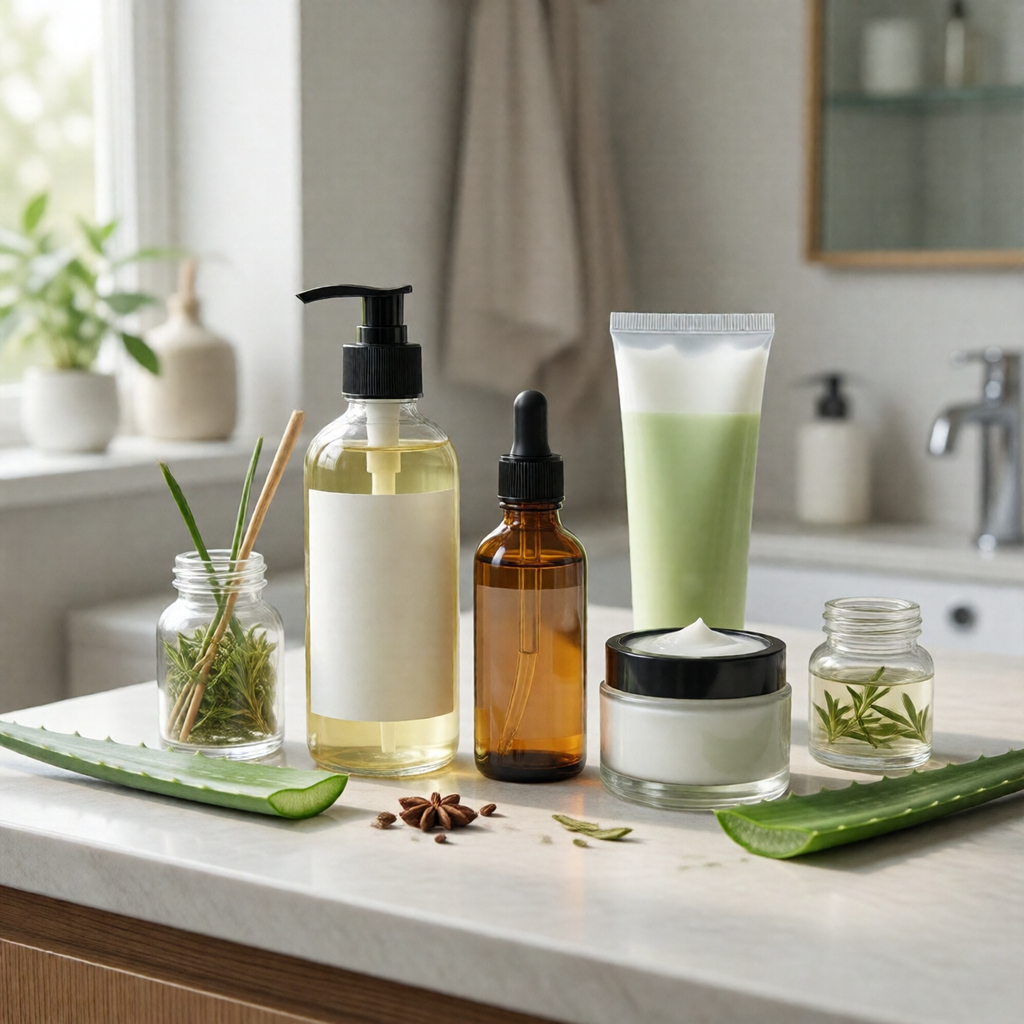
This guide explains how to build a simple natural skincare routine and how to choose suitable products for everyday use.
Table of Contents
- Why Keep Your Skincare Routine Simple?
- Step 1: Start With a Gentle Cleanser
- Step 2: Use a Hydrating Toner or Mist
- Step 3: Add a Targeted Serum
- Step 4: Moisturise Your Skin
- Step 5: Apply Sun Protection
- Natural Ingredients to Consider
- How to Choose Products for Your Skin Type
- Common Natural Skincare Mistakes
- Building a Routine You Can Maintain
- Conclusion
Why Keep Your Skincare Routine Simple?
A complicated skincare routine can make it difficult to determine which products are helping your skin and which ones may be causing irritation.
A simple routine allows you to introduce products gradually and observe how your skin responds.
For most people, the basic steps are cleansing, moisturising and sun protection. Additional products such as toners, serums and masks can be added depending on individual needs.
A natural skincare routine can therefore be simple without being incomplete.
The goal is not to use as many natural ingredients as possible. Instead, choose products that complement each other and address your particular skincare concerns.
Step 1: Start With a Gentle Cleanser
Cleansing is the first step of a basic skincare routine.
Throughout the day, your skin can accumulate sweat, oil, dirt and environmental impurities. A suitable cleanser helps remove these substances without leaving the skin feeling excessively dry or uncomfortable.
When choosing a natural cleanser, look for a formulation that matches your skin type.
People with dry or sensitive skin may prefer a gentle, non-stripping cleanser. Those with oily or combination skin may prefer a lightweight cleansing formula that removes excess oil effectively.
Avoid assuming that a stronger cleanser will produce better results. If your skin feels tight or uncomfortable immediately after cleansing, the product may be too harsh for your skin.
Step 2: Use a Hydrating Toner or Mist
A toner is not an essential step for everyone, but some people enjoy including one in their skincare routine.
Natural toners may contain ingredients such as rose water, aloe vera or botanical extracts.
The main purpose should be to complement your routine rather than adding another unnecessary product.
If your cleanser and moisturiser already leave your skin feeling comfortable, you may not need a toner.
For those who enjoy using one, choose a lightweight formula that does not cause dryness or irritation.
Step 3: Add a Targeted Serum
Serums are concentrated skincare products designed to address specific concerns.
Depending on the formulation, a natural skincare serum may contain botanical extracts, plant oils, antioxidants or hydrating ingredients.
For example, a hydrating serum may be useful for skin that feels dry or dehydrated, while antioxidant-rich formulations may be chosen as part of a general skin maintenance routine.
When introducing a serum, start with one product rather than several different treatments at the same time.
This makes it easier to understand how your skin responds.
Step 4: Moisturise Your Skin
Moisturiser is one of the most useful products in a basic skincare routine.
It helps support the skin’s moisture barrier and can reduce the feeling of dryness or tightness.
Natural moisturisers may contain ingredients such as shea butter, jojoba oil, aloe vera, plant-derived oils and botanical extracts.
The right texture depends on your skin type.
If you have oily or combination skin, a lightweight moisturiser may feel more comfortable. If your skin is dry, a richer cream may provide the level of moisture you prefer.
Do not choose a moisturiser simply because it contains more natural ingredients. The overall formulation and how your skin responds are more important.
Step 5: Apply Sun Protection
Sun protection should be an important part of your daytime skincare routine.
UV exposure can contribute to premature skin ageing and other forms of skin damage. Therefore, even a carefully designed natural skincare routine should not overlook daily sun protection.
Apply a suitable broad-spectrum sunscreen as the final step of your morning skincare routine.
If you spend extended periods outdoors, follow the product’s instructions regarding reapplication.
Natural skincare products can complement your routine, but they should not be considered a replacement for appropriate sun protection.
Natural Ingredients to Consider
One advantage of natural skincare is the wide variety of botanical ingredients available.
Aloe Vera
Aloe vera is commonly used in skincare products because of its refreshing and soothing properties.
It is often found in gels, moisturisers, masks and other lightweight formulations.
Jojoba Oil
Jojoba oil is a popular botanical oil used in facial and body care products.
Its lightweight feel makes it a common ingredient in moisturisers, facial oils and serums.
Green Tea
Green tea extract contains naturally occurring antioxidants and is frequently used in skincare formulations.
It can be found in cleansers, serums, creams and masks.
Rose
Rose water and rose-derived ingredients are often included in natural beauty products.
They are particularly popular in facial mists, toners and gentle skincare formulations.
Shea Butter
Shea butter has a rich texture and is commonly used in moisturisers and body care products.
It can be useful for formulations designed to provide additional moisture to dry skin.
How to Choose Products for Your Skin Type
Your skincare routine should be based on your individual skin rather than simply following trends.
Dry Skin
Look for hydrating and moisturising products containing ingredients such as plant oils, shea butter or aloe vera.
Avoid using overly harsh cleansers that leave the skin feeling tight.
Oily Skin
Lightweight moisturisers and non-heavy formulations may be more comfortable.
A gentle cleanser can help remove excess oil without unnecessarily stripping the skin.
Combination Skin
Combination skin may require a balanced approach.
You may find that lighter products work well across most areas while drier areas benefit from additional moisturisation.
Sensitive Skin
Keep the routine particularly simple if your skin is easily irritated.
Introduce new products slowly and avoid assuming that every natural ingredient will be suitable for sensitive skin. Botanical extracts and essential oils can still cause irritation or sensitivity in some individuals.
Common Natural Skincare Mistakes
One common mistake is believing that natural automatically means safe for everyone.
Natural ingredients can still cause allergic reactions or irritation. Always consider your personal skin sensitivities when introducing a new product.
Another mistake is changing several products simultaneously.
If you introduce a cleanser, serum, moisturiser and mask at the same time, it can be difficult to identify which product is responsible if your skin reacts negatively.
It is usually better to introduce new products gradually.
Another common mistake is focusing too heavily on individual ingredients instead of the complete formulation. A product may contain a popular botanical ingredient but still not be suitable for your skin.
Building a Routine You Can Maintain
The best skincare routine is one that you can follow consistently.
A simple morning routine could include:
- Gentle cleanser
- Hydrating toner or serum, if needed
- Moisturiser
- Sunscreen
A basic evening routine could include:
- Gentle cleanser
- Serum, if required
- Moisturiser
You can add other products when necessary, but there is no need to make your routine complicated simply because more skincare products are available.
If you are exploring organic skincare, focus on selecting products with ingredients that match your skin type and personal preferences rather than choosing products based solely on marketing claims.
Conclusion
Creating a natural skincare routine does not have to be complicated.
Start with the fundamentals: cleanse gently, keep your skin moisturised and protect it from the sun. You can then add products such as toners, serums or masks according to your specific needs.
Pay attention to ingredients, but remember that natural does not automatically mean suitable for everyone. Introduce new products gradually and give your skin time to adjust.
With a simple, consistent approach, natural skincare can become an easy part of your everyday beauty routine.