
Exfoliation is often promoted as a quick way to achieve smoother, brighter-looking skin. However, more exfoliation does not necessarily mean better results. Using exfoliating products too frequently can leave the skin feeling dry, tight, or uncomfortable.
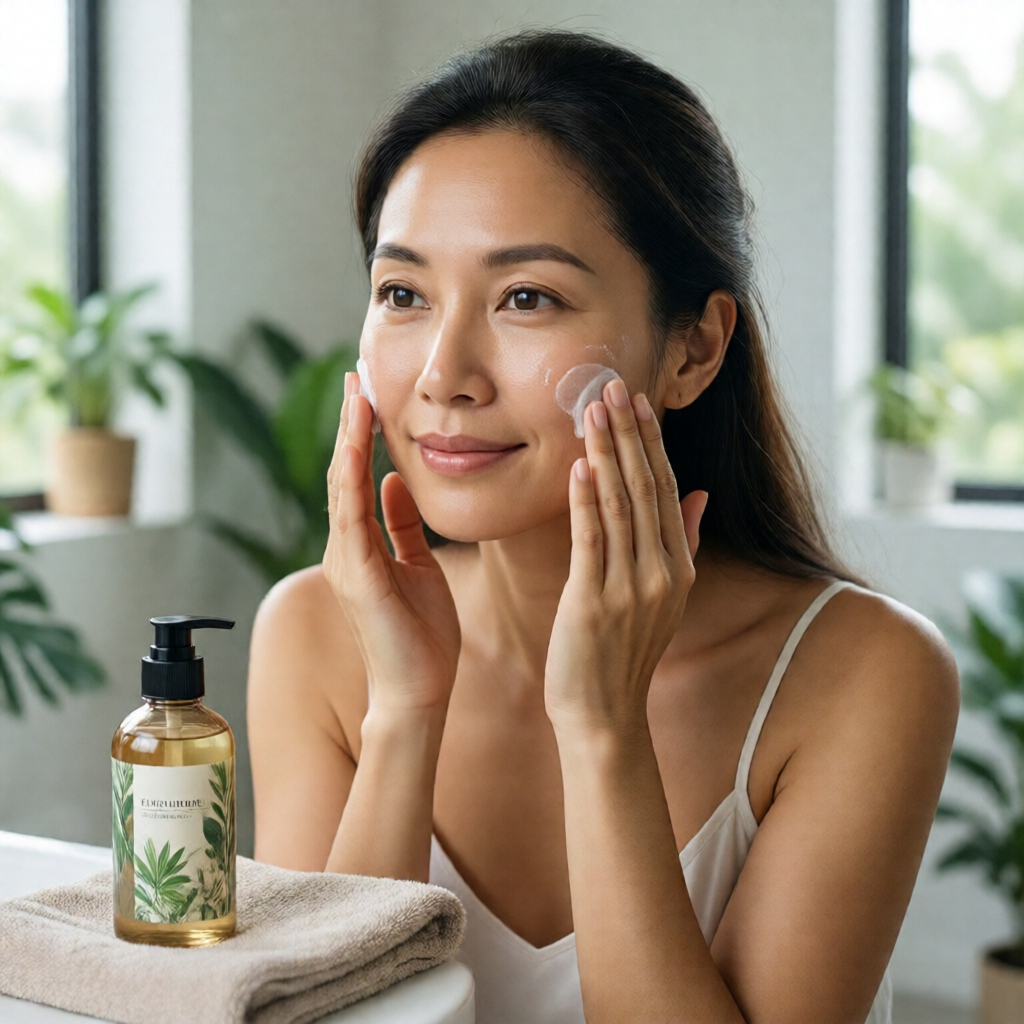
Natural skincare provides several approaches to gentle exfoliation, including plant-derived acids, enzymes, and carefully formulated physical exfoliants. The important part is understanding how exfoliation works and choosing a method that matches your skin type.
For people living in Singapore, exfoliation also needs to be considered alongside the tropical climate, frequent sweating, sunscreen use, and exposure to air conditioning. A simple and balanced approach can help keep your skincare routine manageable without unnecessarily stressing the skin.
Table of Contents
- What Is Exfoliation?
- Why Does Skin Need Exfoliation?
- Natural Ways to Exfoliate
- Physical vs Chemical Exfoliation
- How Often Should You Exfoliate?
- Exfoliation for Dry Skin
- Exfoliation for Oily Skin
- Exfoliation for Combination Skin
- Exfoliation for Sensitive Skin
- Natural Ingredients Commonly Used for Exfoliation
- How to Exfoliate Safely
- Signs You May Be Over-Exfoliating
- Creating a Simple Exfoliation Routine
- Final Thoughts
1. What Is Exfoliation?
Exfoliation is the process of removing dead skin cells from the surface of the skin.
Your skin naturally sheds old cells as part of its normal renewal process. Skincare exfoliation can help remove some of the surface buildup that remains.
There are two broad approaches to exfoliation: physical and chemical.
Physical exfoliation uses particles, brushes, cloths, or other methods to manually loosen surface cells.
Chemical exfoliation uses ingredients such as alpha hydroxy acids, beta hydroxy acids, or enzymes to loosen the connections between surface skin cells.
Natural skincare can include both approaches, depending on the formulation.
2. Why Does Skin Need Exfoliation?
Exfoliation can make skin feel smoother and may improve the appearance of dull surface buildup.
Some people also find that skincare products apply more evenly after appropriate exfoliation.
However, exfoliation is not an essential requirement for everyone. Healthy skin already has its own natural shedding process.
The purpose of exfoliation should therefore be to complement your routine rather than replace basic skincare.
If your skin already feels smooth and comfortable, there may be little reason to exfoliate frequently.
3. Natural Ways to Exfoliate
Natural skincare offers several different exfoliation options.
Fruit-derived enzymes are used in some skincare formulations to provide a gentler exfoliating approach.
Plant-derived acids can also be included in properly formulated products.
Physical exfoliation may involve finely textured particles or powders designed to remove surface buildup through gentle massage.
However, the fact that an exfoliant comes from a natural source does not automatically make it gentle. Concentration, formulation, frequency of use, and individual skin sensitivity all matter.
Avoid homemade recipes containing harsh or abrasive ingredients simply because they are found in the kitchen.
4. Physical vs Chemical Exfoliation
Physical exfoliation requires some form of friction to remove surface buildup.
If the particles are too coarse or the pressure is too strong, physical exfoliation may feel abrasive.
Chemical exfoliation works differently. Acids or enzymes are used to loosen surface cells without requiring vigorous rubbing.
Neither approach is automatically suitable for every person.
If your skin is sensitive, a very gentle formulation used infrequently may be preferable to aggressive scrubbing.
The best method is the one your skin tolerates comfortably and that fits your overall routine.
5. How Often Should You Exfoliate?
There is no universal exfoliation schedule that works for everyone.
Some people may tolerate exfoliation once or twice a week, while others may need to exfoliate less frequently.
Your skin type, the strength of the product, and the other products in your routine all matter.
If you are new to exfoliation, starting slowly is a sensible approach. Introduce one exfoliating product and observe how your skin responds before increasing frequency.
Avoid assuming that daily exfoliation is necessary.
If your skin becomes tight, dry, unusually sensitive, or uncomfortable, reduce the frequency or stop the exfoliating product until your skin settles.
6. Exfoliation for Dry Skin
Dry skin can benefit from a gentle approach to exfoliation, but excessive exfoliation can make dryness more noticeable.
If your skin frequently feels tight or flaky, focus first on gentle cleansing and moisturising.
Once your skin feels comfortable, you can consider introducing a mild exfoliating product occasionally.
Avoid aggressive scrubbing. A gentle chemical exfoliant may be more comfortable for some people than a rough physical scrub.
After exfoliation, apply an appropriate moisturiser to support comfortable-looking skin.
7. Exfoliation for Oily Skin
Oily skin can accumulate excess sebum and surface buildup, which may make exfoliation appealing.
However, repeatedly trying to remove oil through aggressive cleansing and exfoliation can leave the skin feeling uncomfortable.
If you have oily skin, consider using a suitable exfoliating product at a moderate frequency rather than attempting to completely eliminate surface oil.
A lightweight moisturiser should remain part of the routine.
Exfoliation should complement your skincare routine, not become a way of constantly stripping the skin.
8. Exfoliation for Combination Skin
Combination skin often has different needs across different areas of the face.
The T-zone may appear oilier, while the cheeks may feel normal or dry.
Instead of automatically applying the same amount of exfoliant everywhere, consider your skin’s individual response.
A lightweight exfoliation approach may be appropriate for areas that experience more surface buildup, while drier areas may need less frequent treatment.
This is one reason why skincare routines should be flexible rather than based entirely on rigid schedules.
9. Exfoliation for Sensitive Skin
Sensitive skin requires particular caution.
Physical scrubs may be uncomfortable for some people, while acids and enzymes can also cause irritation depending on their concentration and formulation.
If your skin is easily irritated, introduce new exfoliating products gradually.
Patch testing can help you assess how your skin responds to a product, although it cannot guarantee that irritation will never occur.
If your skin is already irritated, red, or uncomfortable, consider avoiding exfoliation until it has returned to its normal state.
10. Natural Ingredients Commonly Used for Exfoliation
Several naturally derived ingredients are commonly used in exfoliating skincare.
Fruit enzymes from ingredients such as papaya or pineapple may be included in facial products designed to loosen surface buildup.
Alpha hydroxy acids can also be derived from naturally occurring sources and are commonly used in exfoliating formulations.
Lactic acid, for example, is an alpha hydroxy acid frequently used in skincare.
Other products may use naturally derived powders or finely milled particles for physical exfoliation.
The important factor is not simply whether an ingredient is natural. The finished formulation determines how the product behaves on the skin.
11. How to Exfoliate Safely
Start with clean skin and follow the instructions provided with your exfoliating product.
Do not scrub harder in an attempt to obtain faster results.
If you are using an acid or enzyme product, follow the recommended application time and frequency.
Avoid introducing several exfoliating products at the same time.
For example, using a scrub, exfoliating acid, enzyme mask, and strong active treatment within the same routine may provide more exfoliation than your skin needs.
After exfoliating, use a moisturiser that suits your skin.
Daytime sun protection is also important because some exfoliating treatments can make skin more sensitive to sunlight.
12. Signs You May Be Over-Exfoliating
Over-exfoliation can happen when exfoliating products are used too frequently or when several exfoliating products are combined.
Possible signs include persistent tightness, dryness, increased sensitivity, uncomfortable stinging, or skin that appears unusually irritated.
If you notice these changes, simplify your skincare routine.
Temporarily stop exfoliating and focus on gentle cleansing, moisturising, and sun protection.
Once your skin feels comfortable again, reassess whether you actually need to exfoliate as frequently as before.
13. Creating a Simple Exfoliation Routine
A simple routine can be easier to maintain.
For example, you might choose one gentle exfoliating product and use it occasionally according to its instructions.
On exfoliation days, avoid adding unnecessary additional active products.
On other days, focus on basic cleansing, hydration, moisturising, and sun protection.
For Singapore’s climate, choose textures that feel comfortable in warm and humid conditions. If you spend significant time outdoors, maintain consistent daytime sun protection.
The goal is not to exfoliate as often as possible. It is to find a frequency that leaves your skin feeling smooth and comfortable without causing irritation.
14. Final Thoughts
Exfoliation can be a useful addition to a skincare routine, but it is not something that needs to be done aggressively or every day.
Natural exfoliating ingredients such as fruit enzymes and naturally derived acids can provide different options, while gentle physical exfoliation may suit some individuals.
The right frequency depends on your skin type, the product being used, and how your skin responds.
Start slowly, avoid combining multiple exfoliating treatments unnecessarily, and pay attention to signs of irritation.
Most importantly, remember that a healthy skincare routine does not depend on constant exfoliation. Gentle cleansing, adequate moisturising, hydration, and daily sun protection remain the foundation of everyday skin care.