Healthy-looking skin depends on more than simply applying moisturiser. Your skin needs water to maintain a comfortable, smooth appearance, while its natural barrier helps prevent excessive moisture loss. When the skin becomes dehydrated, it may feel tight, look dull, or develop rough patches.
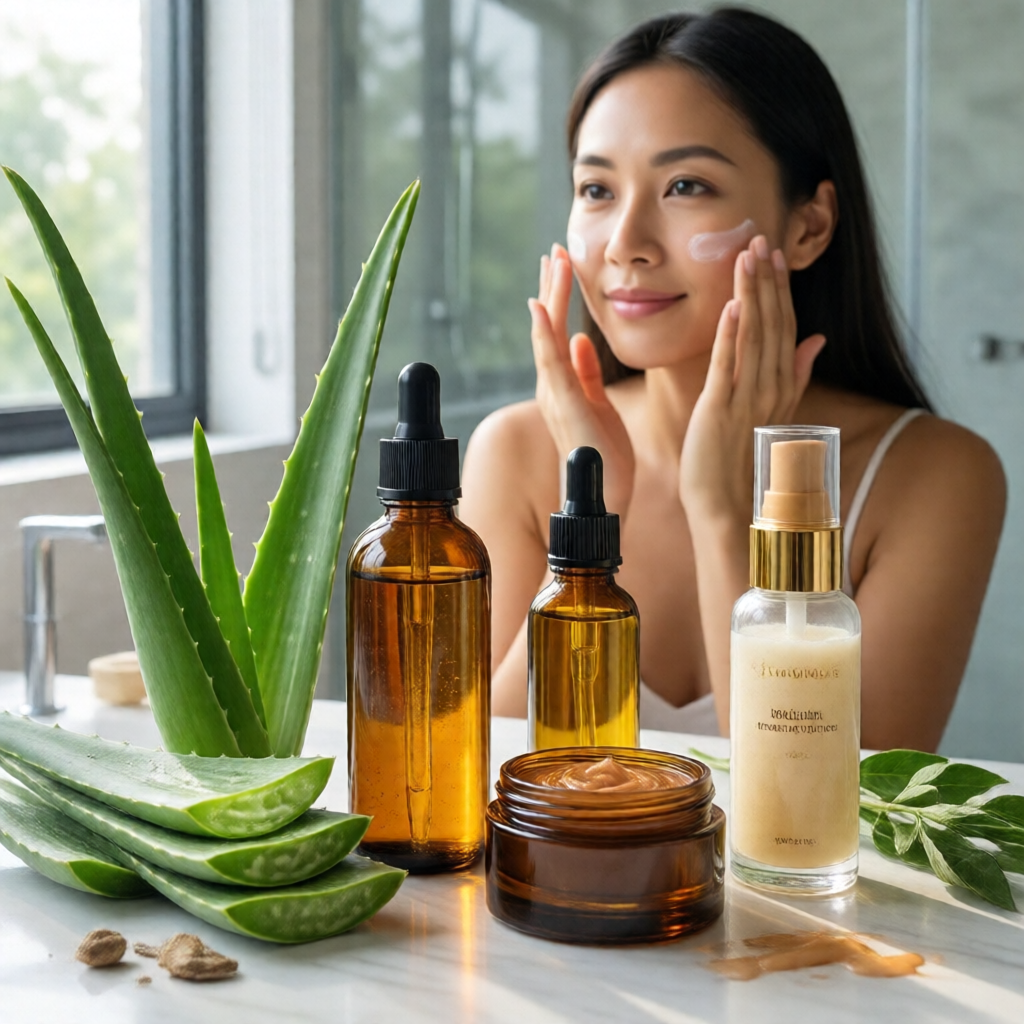
Natural skincare offers a wide range of plant-derived and naturally occurring ingredients that can support hydration and help the skin retain moisture. However, natural does not automatically mean suitable for every skin type. Understanding what different ingredients do can make it easier to choose products that fit your individual routine.
Table of Contents
- Why Skin Hydration Matters
- Hydration vs Moisture: What Is the Difference?
- Aloe Vera for Lightweight Hydration
- Hyaluronic Acid for Water Binding
- Glycerin for Moisture Retention
- Squalane for Supporting the Skin Barrier
- Jojoba Oil for Soft, Balanced Moisture
- Shea Butter for Dry Skin
- Coconut Oil and Skin Moisture
- How to Choose Hydrating Ingredients for Your Skin
- Building a Simple Natural Hydration Routine
- Final Thoughts
1. Why Skin Hydration Matters
Water is an important component of healthy skin. Well-hydrated skin generally feels softer and more comfortable and can have a smoother appearance.
Environmental conditions can affect how comfortable your skin feels. Air conditioning, frequent cleansing, hot weather, and exposure to environmental factors may contribute to dryness or dehydration.
This is particularly relevant in Singapore, where outdoor humidity can be high while indoor air conditioning can create a very different environment. A skincare routine therefore needs to provide hydration without necessarily feeling excessively heavy.
Natural skincare ingredients can be useful when selected according to your skin’s needs and incorporated into a consistent routine.
2. Hydration vs Moisture: What Is the Difference?
The terms hydration and moisturising are often used interchangeably, but they describe slightly different concepts.
Hydrating ingredients generally help increase the water content available to the outer layers of the skin. Humectants such as glycerin and hyaluronic acid are commonly used for this purpose.
Moisturising products can also contain ingredients that help soften the skin and reduce moisture loss. Oils and emollient ingredients can help improve the feel of dry or rough skin by supporting the skin’s surface.
A balanced skincare routine may therefore combine both approaches: ingredients that attract or bind water and ingredients that help maintain a comfortable skin barrier.
3. Aloe Vera for Lightweight Hydration
Aloe vera is one of the most familiar botanical ingredients in skincare. Its lightweight gel texture makes it popular in products designed for hydration and soothing skin.
Aloe vera-based products can be particularly appealing to people who dislike heavy creams. The ingredient is commonly found in gels, moisturisers, masks, and other lightweight skincare formulations.
When choosing an aloe vera product, look at the complete ingredient list rather than relying only on the word “natural” on the packaging. The overall formulation, preservatives, fragrance, and other ingredients can influence how the product feels on your skin.
4. Hyaluronic Acid for Water Binding
Although hyaluronic acid can be produced through different processes, it is widely used in modern skincare because of its ability to attract and hold water.
It is commonly found in hydrating serums, moisturisers, and lightweight facial products. Different molecular weights can be used in formulations to provide different properties and textures.
Hyaluronic acid is often useful for people who want hydration without adding a significant amount of oil to their routine.
For best results, it can be incorporated into a broader moisturising routine rather than treated as the only skincare product needed for hydration.
5. Glycerin for Moisture Retention
Glycerin is another well-established humectant commonly found in moisturisers and cleansers.
It works by attracting water and is valued for its ability to help the skin feel softer and more hydrated. Because it is versatile and works across many types of formulations, glycerin is frequently included in products designed for dry or dehydrated skin.
One advantage of glycerin is that it does not necessarily create the heavy or greasy feeling associated with some facial oils and richer creams.
For combination or oily skin, a lightweight glycerin-containing moisturiser may therefore be more comfortable than a very rich product.
6. Squalane for Supporting the Skin Barrier
Squalane is an emollient commonly used in skincare to soften the skin and reduce the feeling of dryness.
Modern skincare products may use plant-derived squalane, often sourced from materials such as olives or sugarcane. It has a lightweight texture compared with many traditional facial oils.
Squalane can be useful when your skin needs additional softness without wanting an especially thick product.
When selecting a squalane product, consider how it fits with the rest of your routine. A few drops may be sufficient, particularly if you already use a moisturiser containing other emollient ingredients.
7. Jojoba Oil for Soft, Balanced Moisture
Jojoba oil is commonly used in natural skincare because its texture is relatively lightweight and its composition differs from many conventional plant oils.
It can help soften the skin and is frequently included in facial oils, cleansers, moisturisers, and other products.
Jojoba oil may work well for people who prefer oil-based skincare but do not want a particularly heavy texture.
As with any facial oil, start with a small amount. Applying too many products at once can make it difficult to determine which ingredient is responsible if your skin becomes irritated or congested.
8. Shea Butter for Dry Skin
Shea butter is a rich plant-derived ingredient commonly used in products designed for dry skin.
Its thick texture makes it particularly suitable for richer creams, body products, and intensive moisturising formulations. It can help leave the skin feeling softer and more protected from excessive dryness.
However, a rich ingredient is not necessarily ideal for everyone. People with oily or combination skin may prefer lighter formulations, especially during hot and humid weather.
Shea butter may therefore be more appropriate for areas that become particularly dry rather than necessarily being required across the entire face.
9. Coconut Oil and Skin Moisture
Coconut oil is a popular natural ingredient and can provide an emollient effect that helps soften the skin.
However, facial skincare requires more consideration than simply choosing an ingredient because it is natural. Coconut oil can feel heavy for some people and may not be the preferred option for everyone, particularly those prone to clogged pores.
If you want to experiment with coconut oil, consider how your skin responds and avoid assuming that an ingredient suitable for body care will automatically be ideal for facial use.
A professionally formulated skincare product can provide a more predictable combination of ingredients and textures.
10. How to Choose Hydrating Ingredients for Your Skin
The best ingredient depends on your skin type, environment, and personal preferences.
For dry skin, richer moisturising ingredients such as shea butter, squalane, or suitable plant oils may provide a more comfortable finish.
For dehydrated but oily skin, lightweight humectants such as glycerin or hyaluronic acid may be preferable. A lightweight moisturiser can provide hydration without making the skin feel excessively greasy.
Combination skin may benefit from using different textures on different areas. A lighter product can be applied to oilier areas while a richer moisturiser can be used where dryness is more noticeable.
Sensitive skin requires additional care. Even natural botanical ingredients can cause irritation or sensitivity in some individuals. Introducing one new product at a time and patch testing when appropriate can make it easier to identify potential problems.
11. Building a Simple Natural Hydration Routine
A complicated routine is not necessary to focus on hydration.
In the morning, start with a gentle cleanser if needed, followed by a hydrating serum or lightweight moisturiser. Finish with sunscreen during daytime.
At night, cleanse away sunscreen, makeup, and daily buildup. Apply a hydrating product and follow with a moisturiser appropriate for your skin type.
The key is consistency rather than using a large number of products.
If your skin feels tight after cleansing, consider whether your cleanser is too aggressive or whether you are cleansing more frequently than necessary. If your skin feels greasy, examine the texture and quantity of your moisturiser rather than automatically removing hydration-focused products.
In Singapore’s climate, lightweight layers can often be more comfortable than applying one very heavy product.
12. Final Thoughts
Natural skincare provides many ingredients that can help support comfortable, hydrated-looking skin. Aloe vera, glycerin, hyaluronic acid, squalane, jojoba oil, and shea butter each have different properties and can be incorporated into different types of formulations.
The most important step is choosing ingredients according to your skin rather than simply following ingredient trends. Hydration does not require a complicated routine, and using more products does not necessarily produce better results.
A simple routine built around gentle cleansing, appropriate hydration, moisturising, and daytime sun protection can provide a practical foundation for maintaining healthy-looking skin.
When selecting natural or organic skincare products, always consider the complete formulation, your individual skin response, and the texture that you can comfortably use every day. Consistent care is often more useful than constantly changing products in search of a quick solution.