
Singapore’s hot and humid climate can make skincare surprisingly complicated. Your skin may look shiny during the day while still feeling tight, uncomfortable or lacking moisture. This can happen when the skin is dehydrated.
Dehydrated skin does not necessarily mean dry skin. Dry skin is generally associated with a lack of oil, while dehydrated skin lacks sufficient water. Even oily or combination skin can become dehydrated, particularly when exposed to air conditioning, heat, sweat, frequent cleansing and environmental stress.
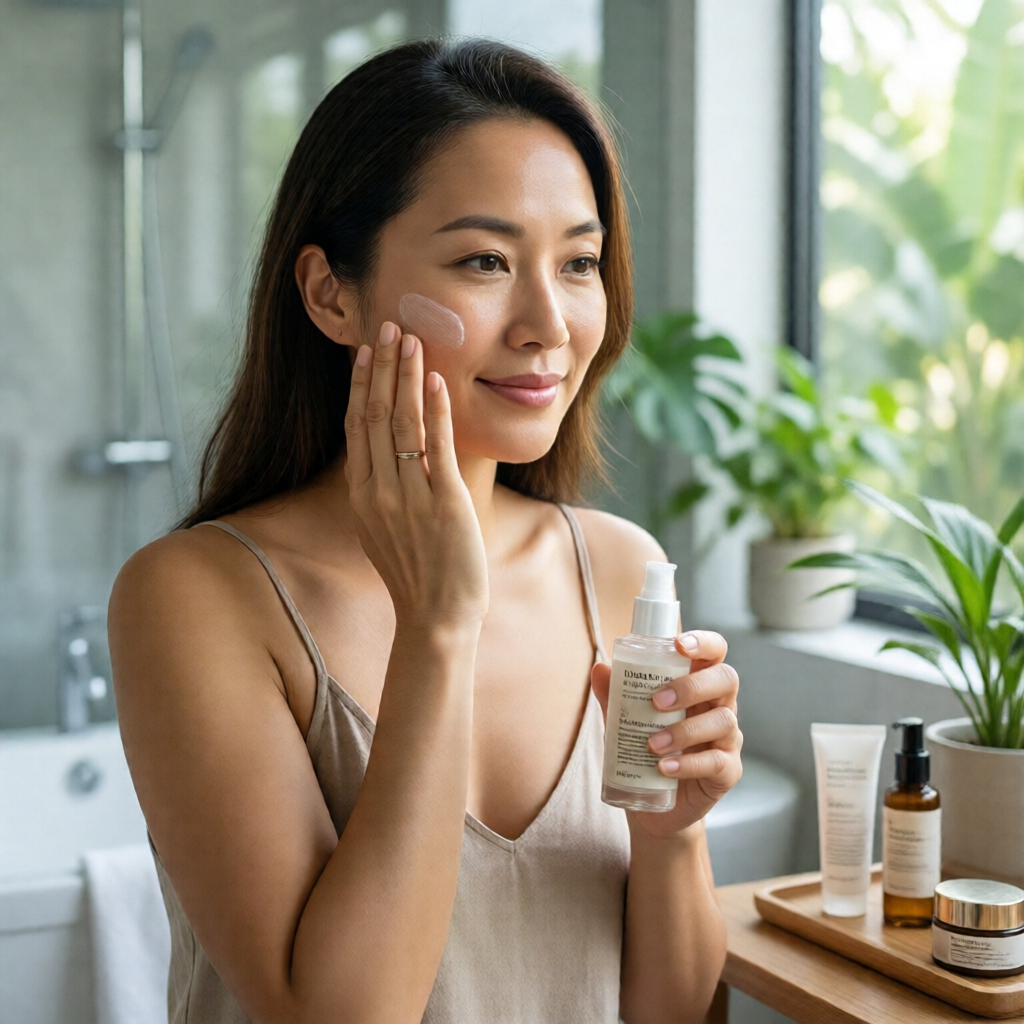
Building the right skincare routine for dehydrated skin involves more than simply applying a heavier moisturiser. The goal is to provide hydration, support the skin barrier and maintain moisture without making the skin feel greasy or overloaded.
Table of Contents
- What Is Dehydrated Skin?
- Signs Your Skin May Be Dehydrated
- Why Singapore’s Climate Can Affect Skin Hydration
- Step 1: Use a Gentle Cleanser
- Step 2: Add Hydrating Ingredients
- Step 3: Apply a Lightweight Moisturiser
- Step 4: Protect Your Skin During the Day
- What to Avoid When Your Skin Is Dehydrated
- How to Adjust Your Routine
- Final Thoughts
What Is Dehydrated Skin?
Dehydrated skin is skin that does not have enough water. It is a temporary condition rather than a permanent skin type, which means people with oily, dry, combination or normal skin can all experience dehydration.
When the skin does not retain enough water, it may feel tight even if it produces plenty of oil. Fine lines can also appear more noticeable, particularly around the eyes and forehead.
This is why adding more oil is not always the solution. A better approach is to combine hydration with ingredients and products that help reduce moisture loss.
Signs Your Skin May Be Dehydrated
Dehydration can appear differently from person to person. Common signs include:
- A tight or uncomfortable feeling after cleansing
- Skin that looks dull or tired
- Fine lines that appear more visible
- Rough or uneven texture
- Increased sensitivity
- Makeup that settles into fine lines
- Oily skin combined with a feeling of tightness
- Skin that looks temporarily better after applying moisturiser
One useful clue is the combination of oiliness and tightness. If your skin becomes shiny during the day but still feels uncomfortable, dehydration may be contributing to the problem.
Persistent irritation, severe dryness or unusual skin changes should be assessed by a qualified healthcare professional rather than treated solely through cosmetic skincare.
Why Singapore’s Climate Can Affect Skin Hydration
Singapore’s tropical environment is hot and humid, so it may seem unlikely that skin could become dehydrated. However, humidity is only one part of the equation.
People living in Singapore regularly move between outdoor heat and strongly air-conditioned indoor environments. Air conditioning can make the surrounding air considerably less humid than outdoors. Frequent washing, hot showers, sweating and exposure to environmental pollutants can also affect the skin’s ability to maintain a comfortable moisture balance.
This makes a balanced routine particularly useful. Instead of using extremely rich products simply because the skin feels tight, many people may prefer lightweight hydration followed by an appropriate moisturiser.
Step 1: Use a Gentle Cleanser
Cleansing is an important first step, but aggressive cleansing can leave dehydrated skin feeling even tighter.
Choose a gentle facial cleanser that removes sweat, excess oil, sunscreen and daily impurities without leaving the skin feeling stripped. Avoid making your face feel extremely tight or “squeaky clean” after washing.
If your skin is particularly dehydrated, you may also want to avoid washing repeatedly throughout the day unless necessary. After exercising or heavy sweating, cleansing may be appropriate, but unnecessary repeated washing can make a routine more irritating.
Use lukewarm rather than very hot water and gently pat your face dry instead of rubbing it with a towel.
Step 2: Add Hydrating Ingredients
After cleansing, consider using a hydrating product such as a toner, essence or serum.
Look for ingredients commonly used to support skin hydration, such as glycerin, hyaluronic acid and other humectants. Humectants help attract and hold water within the outer layers of the skin.
However, hydration does not have to mean using a large number of products. One well-formulated hydrating step may be enough for a simple routine.
Apply hydrating products according to their instructions and follow with moisturiser. Keeping the routine simple makes it easier to identify which products work comfortably for your skin.
Step 3: Apply a Lightweight Moisturiser
Hydration and moisturisation are related but not identical.
A hydrating product can help increase water content, while a moisturiser can help reduce moisture loss and improve the skin’s overall comfort.
For Singapore’s climate, a lightweight lotion, gel-cream or non-heavy moisturiser may feel more comfortable for many people, especially during the daytime. People with drier skin may prefer a richer moisturiser, particularly at night.
The important point is to choose according to your skin’s needs rather than assuming that dehydrated skin automatically requires the heaviest cream available.
Step 4: Protect Your Skin During the Day
A daytime skincare routine should include sun protection.
UV exposure can contribute to premature skin ageing and can affect overall skin health. Use a broad-spectrum sunscreen that suits your skin type and apply it as directed.
If you spend significant time outdoors in Singapore, additional protection such as seeking shade, wearing a hat and limiting prolonged direct sun exposure can also be useful.
Sunscreen should be the final skincare step before makeup, unless the product instructions indicate otherwise.
What to Avoid When Your Skin Is Dehydrated
When skin feels tight or uncomfortable, adding more products is not always the answer. In some cases, simplifying the routine can be more helpful.
Consider reducing unnecessary use of:
- Harsh cleansers
- Very hot water
- Excessive exfoliation
- Multiple strong active ingredients at the same time
- Products that consistently cause burning or irritation
- Frequent unnecessary cleansing
Exfoliation can have a place in a skincare routine, but dehydrated or irritated skin may not respond well to excessive exfoliation.
If your skin becomes increasingly irritated after introducing a product, stop using it and reassess your routine rather than continuing simply because the product is marketed for hydration.
How to Adjust Your Routine
Your skin’s needs can change depending on your environment, lifestyle and daily activities.
For example, you may need a lighter routine during a hot day spent outdoors and more moisturisation after spending many hours in air-conditioned environments.
Exercise can also affect your routine. Sweat and sunscreen may make cleansing necessary after a workout, while replacing moisture afterwards can help your skin feel more comfortable.
The best routine is usually one that you can follow consistently without causing unnecessary irritation. You do not need a complicated collection of products to care for dehydrated skin.
A simple routine could include:
Morning: Gentle cleanser → hydrating product → moisturiser → sunscreen
Evening: Gentle cleanser → hydrating product → moisturiser
Additional products can be introduced when there is a specific reason to use them.
Final Thoughts
Dehydrated skin can affect people with every skin type, including oily and combination skin. In Singapore, the combination of outdoor heat, humidity, sweating and frequent exposure to air conditioning can make maintaining comfortable skin hydration more challenging.
A practical approach is to focus on gentle cleansing, adequate hydration, appropriate moisturisation and daily sun protection. Avoiding excessive cleansing and exfoliation can also help prevent unnecessary stress on the skin.
Rather than constantly adding new products, pay attention to how your skin feels and behaves. A simple, consistent routine that provides hydration while supporting the skin barrier can be a useful foundation for healthier-looking skin.